Track Mower & Skid Steer Loader Manufacturer

Contact Us
Track Mower & Skid Steer Loader Manufacturer
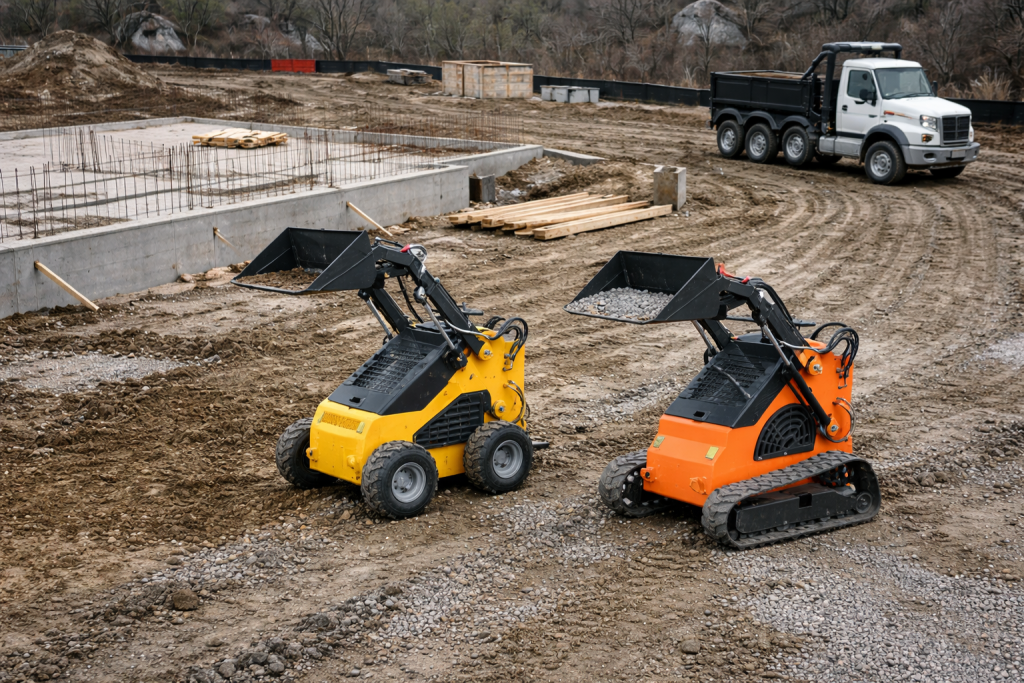
Choosing between a tracked skid steer and a wheeled skid steer loader is one of the most common equipment decisions contractors, landscapers, and property owners face — and it is the first question to answer when selecting the best mini skid steer for your terrain. While both machines perform similar tasks and use the same attachments, their performance differs dramatically depending on terrain, operating conditions, and long-term usage.
This guide breaks down the real-world differences between track vs wheel skid steer loaders, explains why those differences exist, and helps you decide which option fits your jobsite—not just on day one, but over the life of the machine.
At a glance, the difference seems simple: one runs on rubber tracks, the other on tires. In practice, that single design choice affects traction, ground pressure, stability, maintenance, and cost.
Neither is universally better—the right choice depends on how and where the machine works. For buyers comparing traction, ground pressure, and operating cost, our tracked and wheeled mini skid steer loaders provide options for different jobsite conditions.
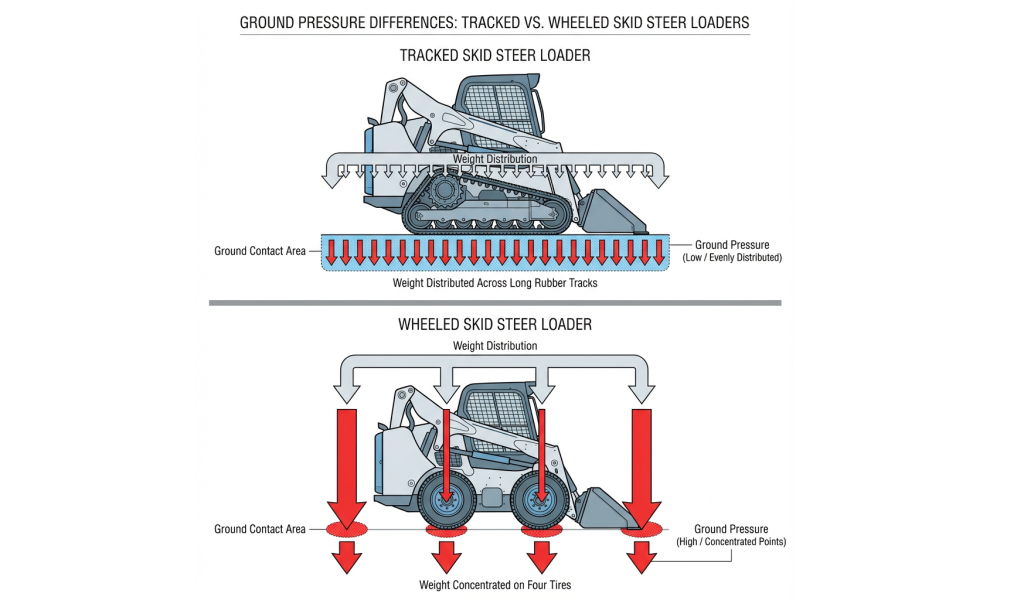
The biggest performance gap between track and wheel skid steers comes down to ground interaction.
Tracked skid steers spread their weight across long tracks, which reduces ground pressure, improves traction on soft or uneven terrain, and minimizes sinking and slippage — making tracked models the recommended platform for running a mini skid steer snow blower in winter conditions.
Wheeled skid steers, by contrast:
Wheeled skid steers perform best on hard, compacted surfaces — making them an ideal pairing for a mini skid steer broom attachment to sweep debris from paved roads, parking lots, and concrete floors.
This difference explains why tracked machines dominate soft-ground jobsites, while wheeled machines remain popular on paved or well-prepared surfaces.
Tracked skid steers excel when traction and flotation matter more than speed.
Wheeled skid steers shine where mobility, efficiency, and operating simplicity are priorities.
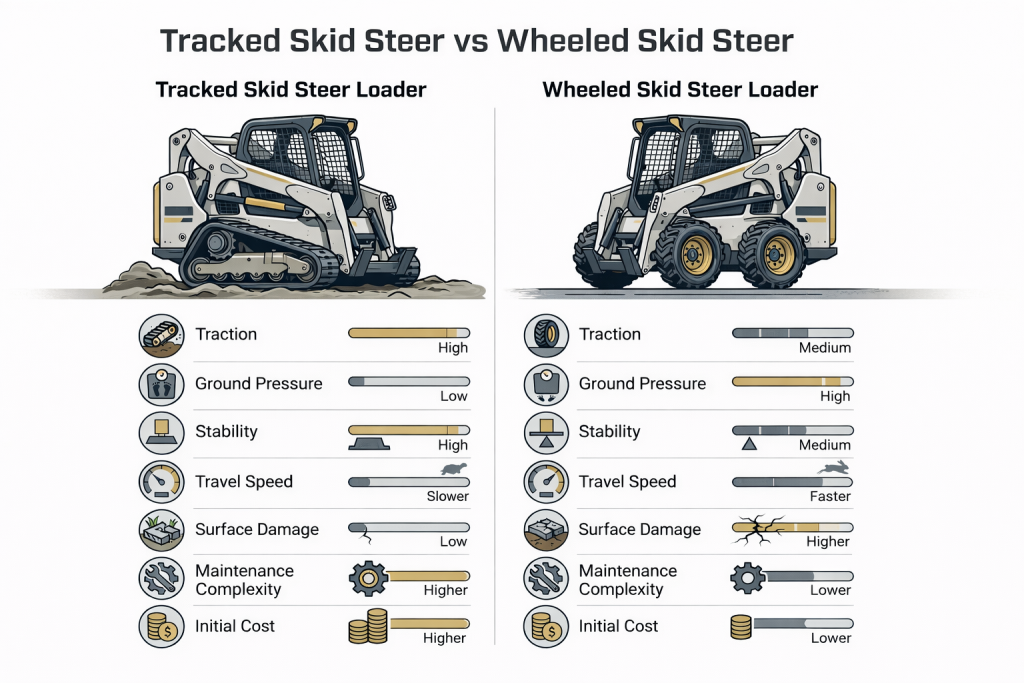
| Feature | Tracked Skid Steer | Wheeled Skid Steer |
|---|---|---|
| Traction | Excellent | Moderate |
| Ground Pressure | Low | Higher |
| Stability | High | Moderate |
| Travel Speed | Slower | Faster |
| Surface Damage | Minimal | Higher |
| Maintenance | More complex | Simpler |
| Initial Cost | Higher | Lower |
| Transport Convenience | Moderate | High |
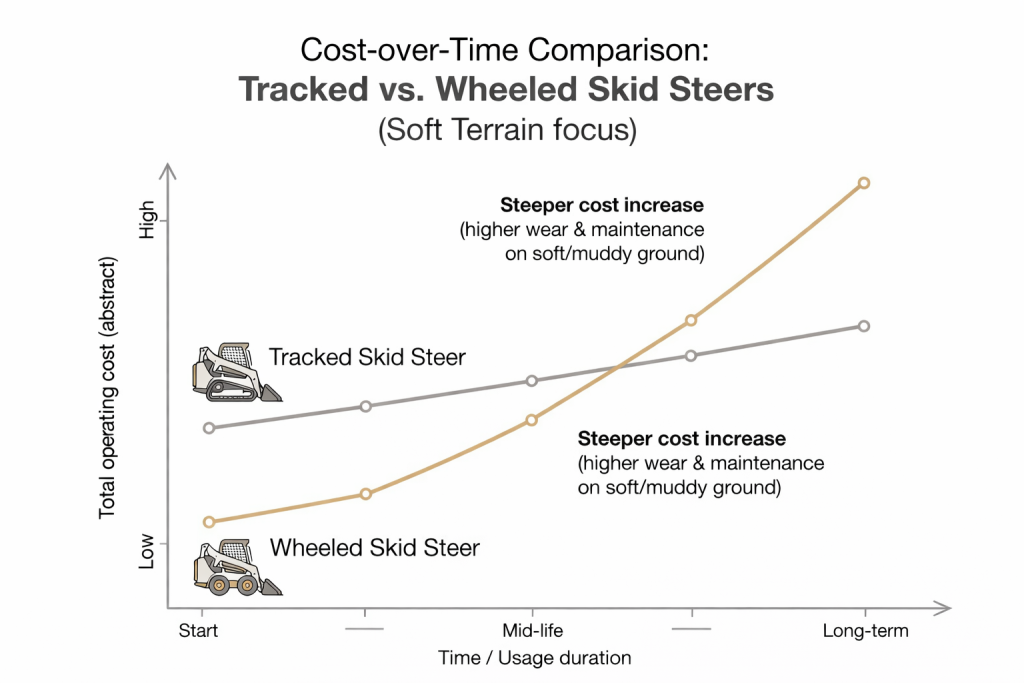
Many buyers focus only on purchase price, but long-term costs tell a different story.
If your work regularly involves mud, slopes, or wet soil, a tracked skid steer may deliver better overall value despite higher initial cost.
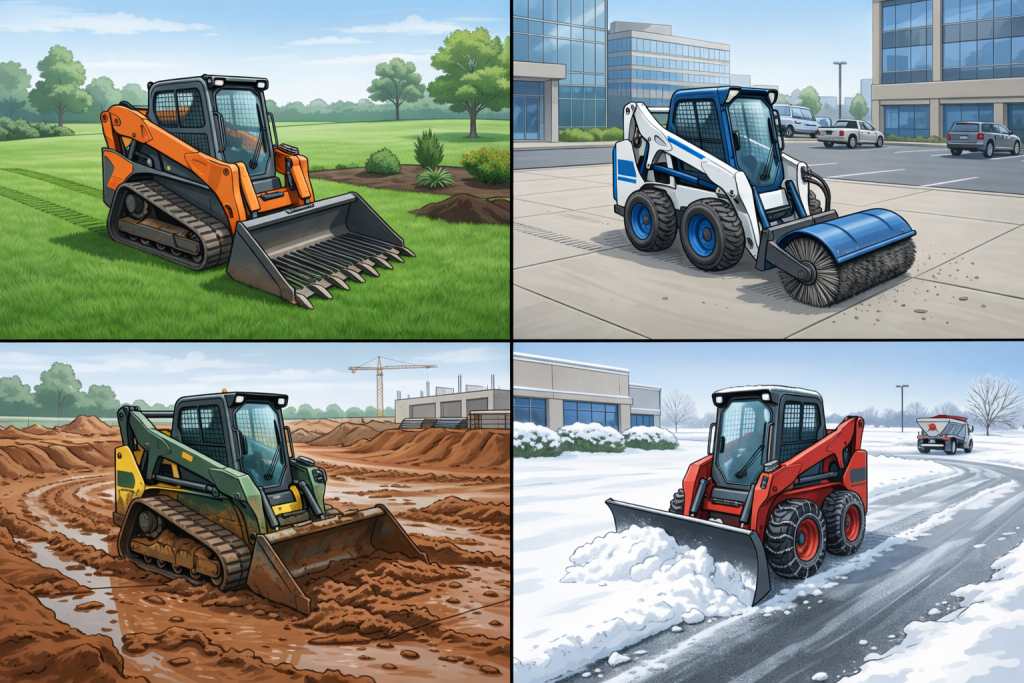
The more variable the terrain, the more valuable tracks become.
Most regret comes not from the machine itself, but from a mismatch between equipment and environment.
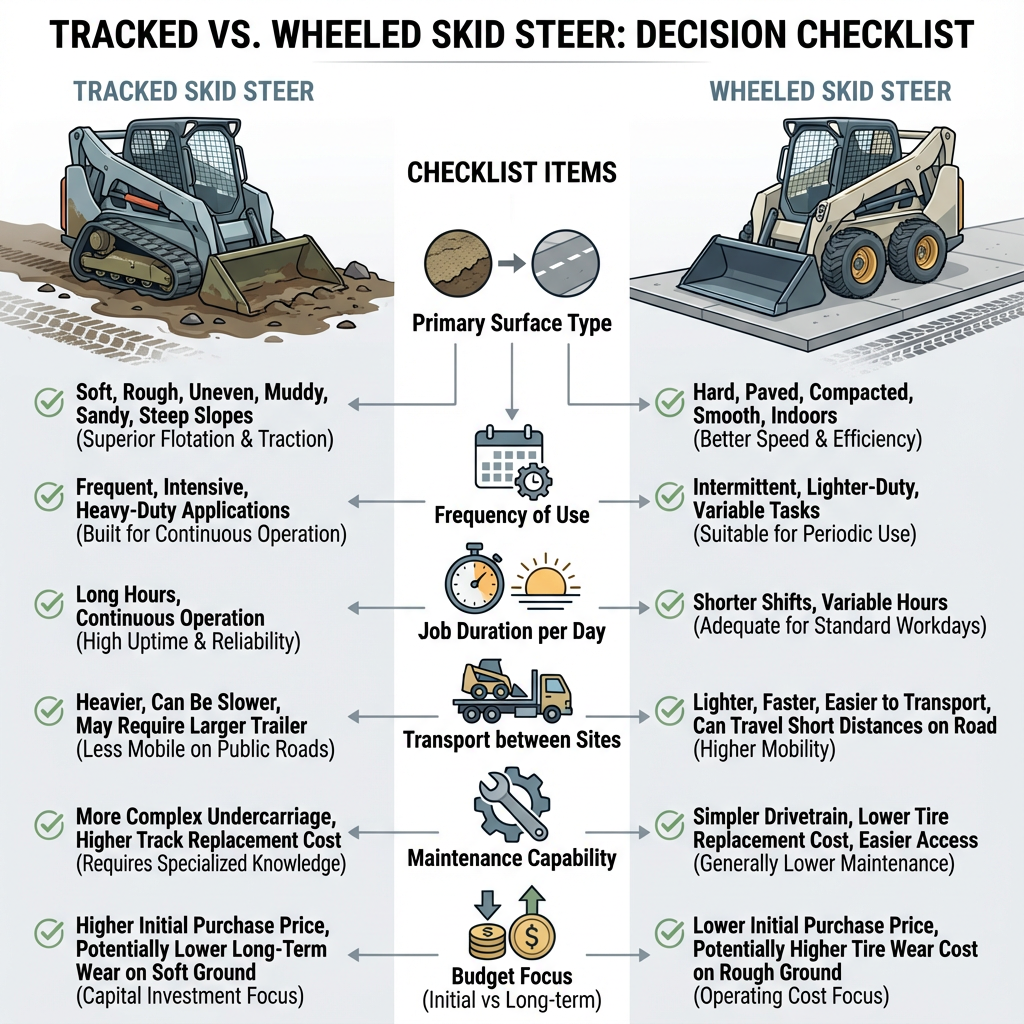
Ask yourself:
Your answers usually point clearly to tracks or wheels.
There is no single “best” skid steer—only the best fit for your work. Tracked skid steers deliver unmatched traction and stability on challenging terrain, while wheeled skid steers offer speed, simplicity, and efficiency on firm ground.
Choosing the right machine means understanding your jobsite realities, not following trends. When terrain, workload, and operating conditions align with the machine design, performance and cost efficiency follow naturally.
Remote control track mowers outperform ride-on slope mowers on steep terrain for safety and productivity — browse the full track mower range if slope mowing is your primary need.
 Guides
 Guides
 Guides
 Guides
 Guides
 Guides