Track Mower & Skid Steer Loader Manufacturer
Track Mower & Skid Steer Loader Manufacturer
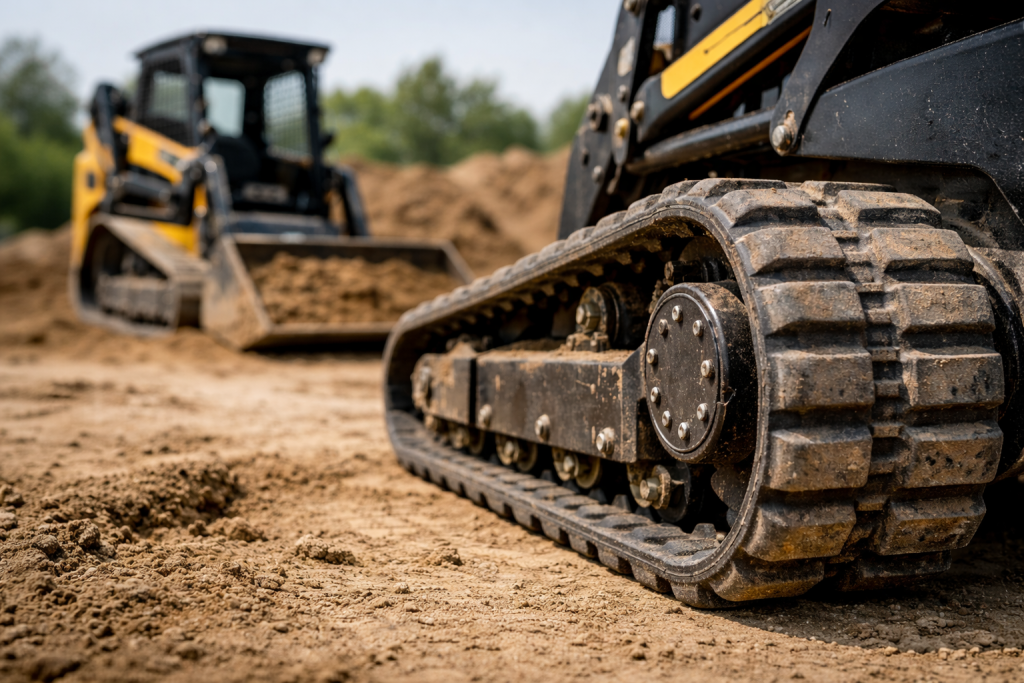
Skid steer tracks are one of the most important wear components on tracked machines. For operators using compact equipment, especially mini skid steer loaders, understanding track lifespan is essential for controlling operating costs, minimizing downtime, and maintaining reliable traction across different job sites.
So, how long do skid steer tracks last? The answer depends on several real-world factors—including terrain, operating habits, and maintenance practices. This guide explains realistic lifespan expectations for mini skid steer rubber tracks, what causes premature wear, and how to extend track life in daily operation.
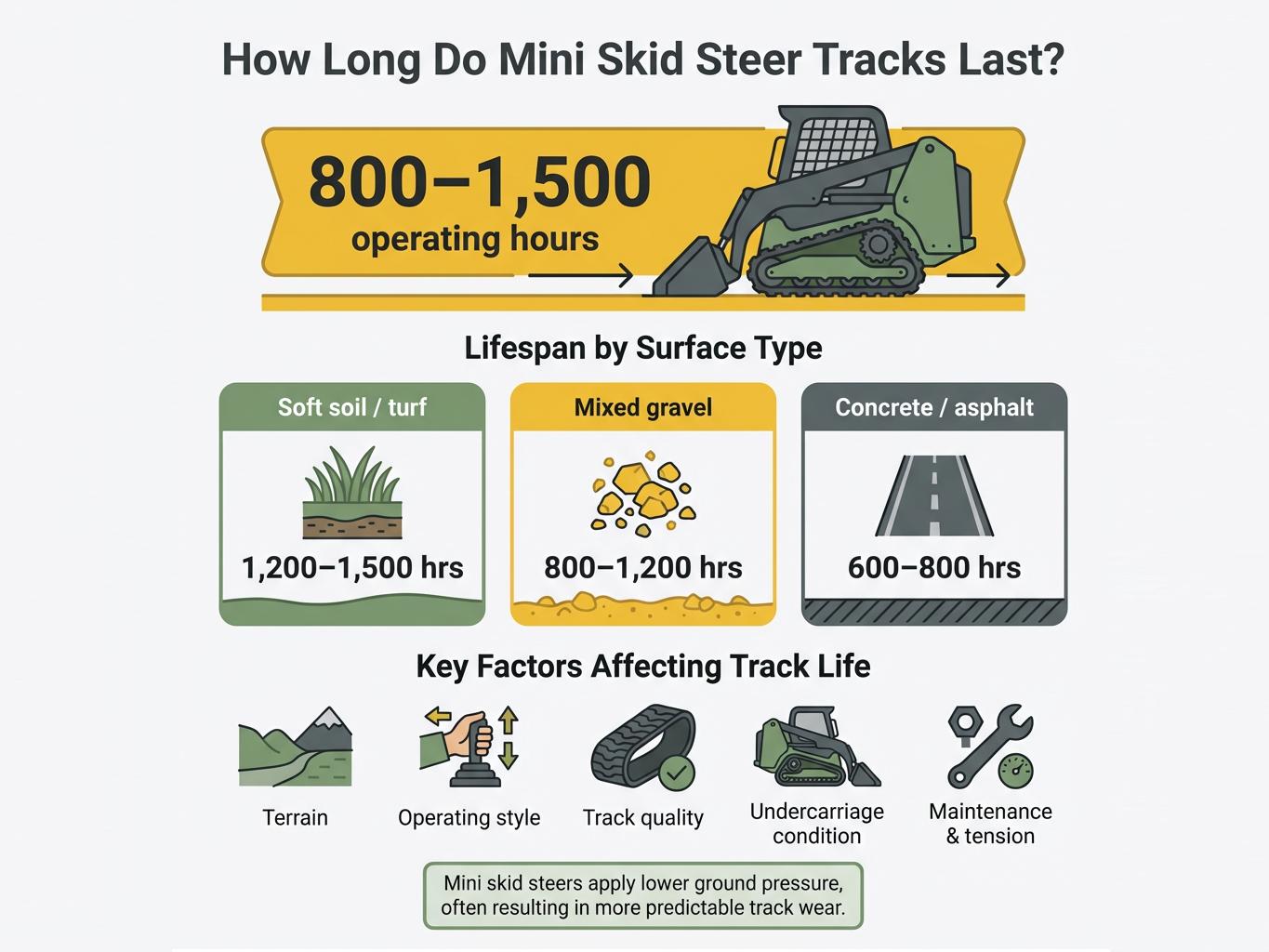
For most machines, skid steer rubber tracks last between 800 and 1,500 operating hours. On mini skid steer loaders, track lifespan often falls near the middle to upper end of this range, thanks to lower machine weight and reduced ground pressure—when used correctly and maintained properly.
Track life is influenced more by how and where the machine is used than by calendar age alone.
Under typical working conditions, mini skid steer tracks generally last:
While these numbers provide a realistic baseline, actual lifespan can vary significantly depending on operating behavior and maintenance consistency.
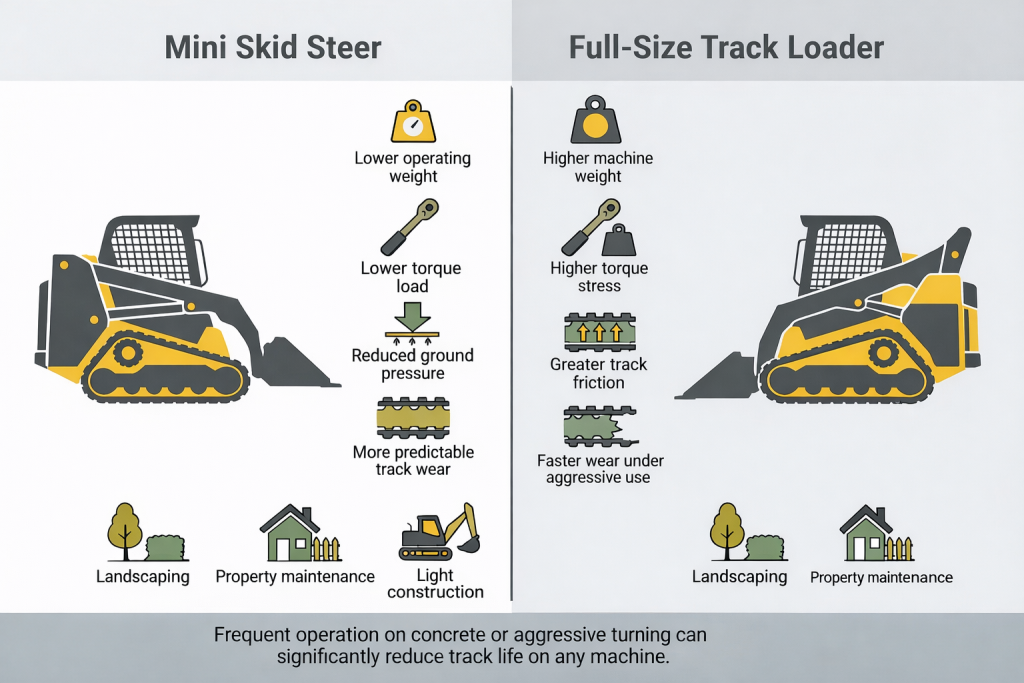
Compared with full-size compact track loaders, mini skid steers place less stress on rubber tracks due to lower operating weight and reduced torque loads. This often results in more predictable wear patterns and longer usable tread life, particularly in landscaping, property maintenance, and light construction work.
However, this advantage can be quickly lost if the machine is frequently driven on hard surfaces or operated with aggressive turning habits.
Surface conditions are the single biggest factor affecting rubber track wear.
Even a low-hour mini skid steer can experience rapid track wear if it spends most of its time operating or turning on hard surfaces.
Skid steers turn by skidding the tracks, which naturally increases friction. Track wear accelerates when operators:
Smoother movements and wider turns can noticeably extend track life—especially on compact machines.
Not all rubber tracks are built the same. Lifespan depends heavily on:
Tracks designed specifically for mini skid steer applications often outperform generic designs by balancing flexibility, traction, and durability.
Rubber tracks do not wear in isolation. Worn or misaligned undercarriage components can shorten track life dramatically.
Common issues include:
Installing new tracks on a neglected undercarriage often leads to premature failure.
Incorrect track tension is one of the most common causes of early wear.
Routine inspections and regular cleaning—especially after muddy or rocky jobs—can add hundreds of hours to usable track life.
Recognizing wear early helps prevent damage to expensive undercarriage components.
Common warning signs include:
Once steel reinforcement becomes visible, track replacement should be planned immediately.
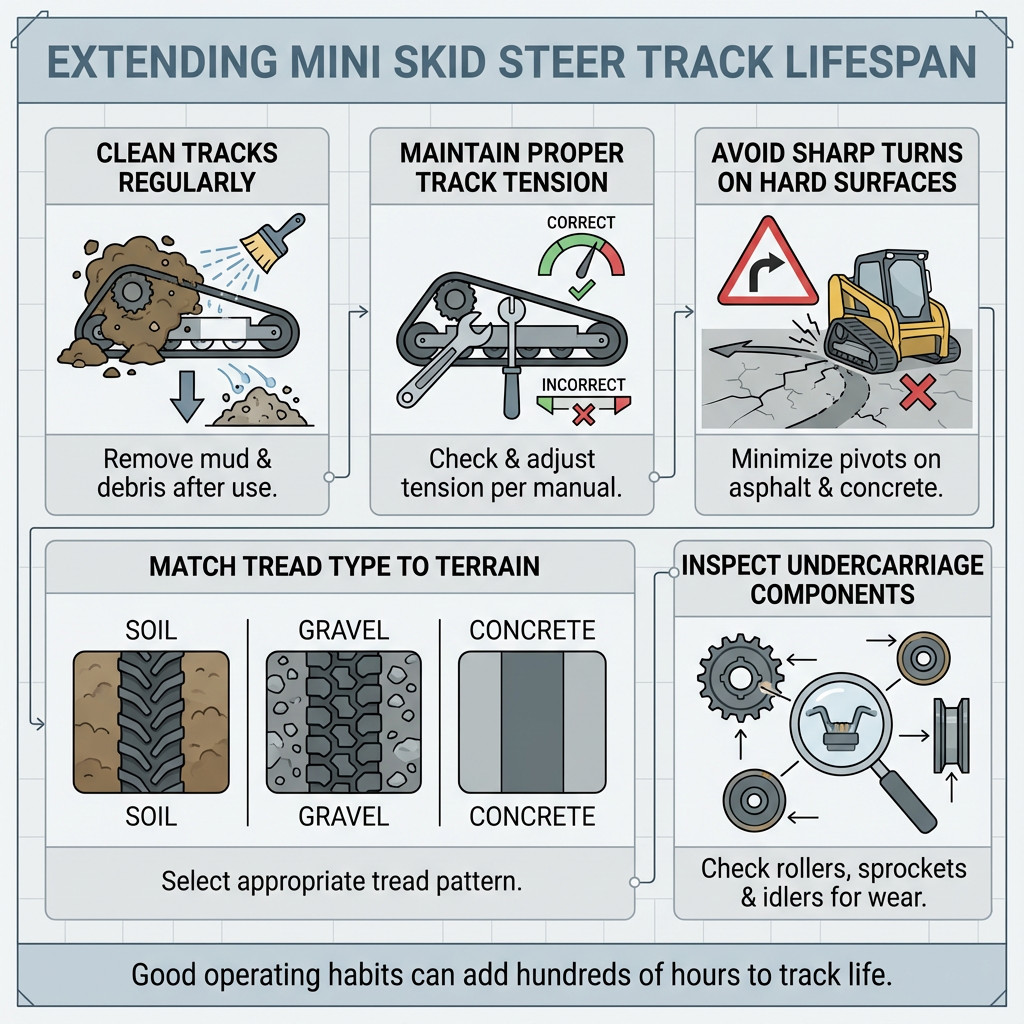
Operators can significantly extend track lifespan by following a few best practices:
These habits are especially effective for mini skid steers, where small operational changes have a large impact on wear rates.
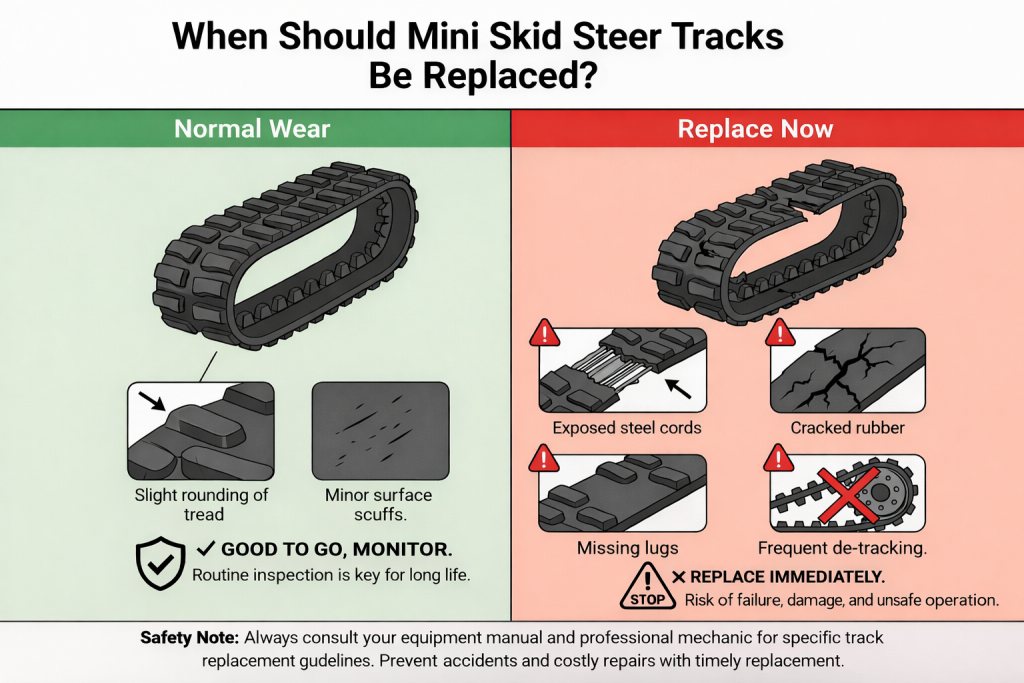
Tracks should be replaced when wear begins to affect traction, stability, or undercarriage alignment. Continuing to operate worn tracks can:
Replacing tracks before complete failure often lowers total ownership costs.
How many hours do mini skid steer tracks last?
Most mini skid steer rubber tracks last around 1,000 to 1,500 hours, depending on terrain, usage patterns, and maintenance quality. Machines used primarily on soil or turf often achieve longer track life.
Do skid steer tracks wear faster on concrete?
Yes. Concrete and asphalt cause the fastest rubber track wear, particularly during sharp turns. Even low-hour machines can experience premature wear if frequently operated on hard surfaces.
When should rubber tracks be replaced?
Tracks should be replaced when tread lugs are heavily worn, cracking becomes widespread, or steel cords are exposed. Delaying replacement can damage undercarriage components and increase repair costs.
So, how long do skid steer tracks last? For mini skid steer tracks, most operators can realistically expect about 1,000 to 1,500 operating hours, with actual results depending on terrain, operating habits, and maintenance practices.
Rubber tracks are consumable components—but with the right selection, proper care, and responsible operation, mini skid steer owners can achieve predictable performance, lower operating costs, and longer service life from every set of tracks.
 Products
 Products
 Products

Receive a quick, personalized quote and start planning your equipment purchase with ease.