Track Mower & Skid Steer Loader Manufacturer

Contact Us
Track Mower & Skid Steer Loader Manufacturer
Tipping load is the weight that would lift a skid steer’s rear end off the ground if carried at full height and reach. Rated operating capacity (ROC) is what the manufacturer actually tells you to carry, and it’s normally just 35% of that tipping load for mini skid steers, or 50% for larger wheeled machines under ISO 14397-2. Never load toward the tipping number itself. Plan around ROC, not tipping load, and you stay stable on flat ground, with margin to spare when the job moves onto a slope.
Key takeaways
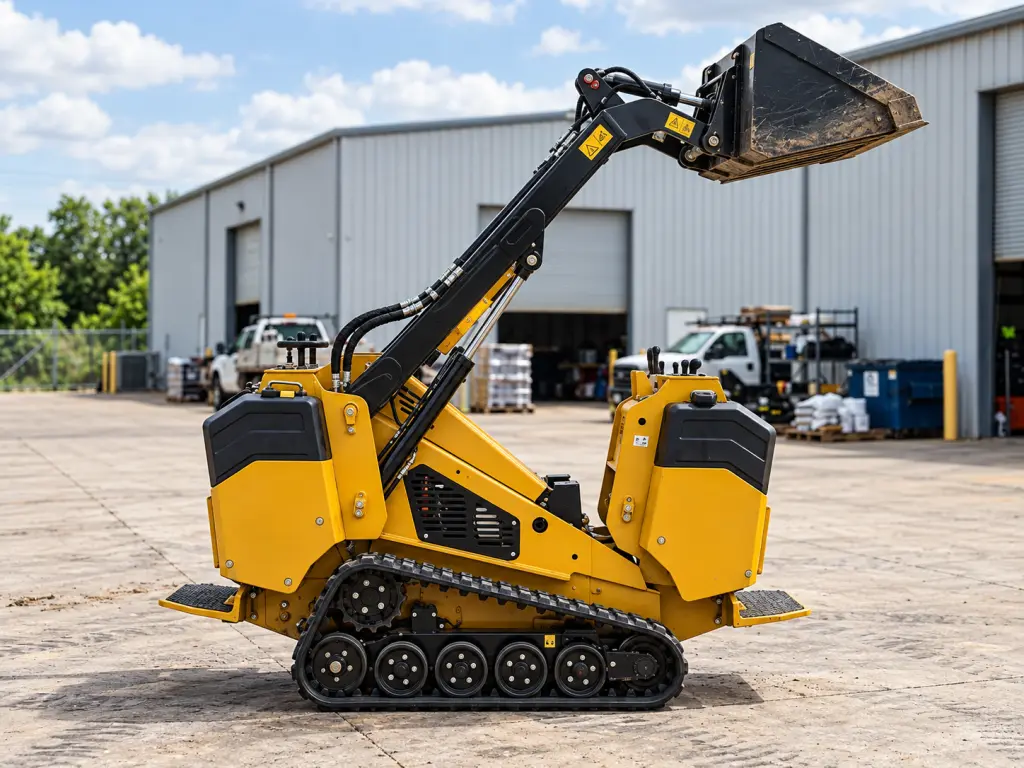
Picture a mini skid steer on flat, hard ground, bucket loaded to its limit, boom raised to full height and reach. Keep adding weight and at some point the rear wheels or tracks lift clean off the ground. That exact weight is the tipping load: the maximum weight that, when placed in the bucket at full height, will cause the rear of the machine to lift off the ground.
It’s a static test, done on level, hard surfaces, with no wind, no slope, no soft soil, no sudden stops. That’s deliberate. Manufacturers isolate the machine’s own geometry and weight distribution from every real-world variable so the number is repeatable and comparable across models.
These two numbers get confused constantly. Operating weight is the machine’s own mass, chassis, engine, counterweights, tracks or tires, with no attachment load. Tipping load is about what you carry, not what the machine weighs on its own. A heavier machine with a lower center of gravity can have a higher tipping load than a lighter one, even at similar dimensions, because weight distribution matters more than raw mass.
Tipping capacity and tipping load are the same measurement. Some spec sheets say one, some say the other, it’s just a naming difference between brands. What actually matters is the conversion that follows it: rated operating capacity equals 35% of tipping load for most mini skid steers.
Run the math on a round number. A machine rated at 2,000 lb tipping load has roughly a 700 lb ROC (2,000 × 0.35 = 700). That’s the number you load against, not the 2,000. Real spec sheets confirm this ratio: one published mini skid steer loader lists a 500 lb ROC, which back-calculates to a tipping load of roughly 1,430 lb at the standard 35% ratio, and a separate mini track loader lists a 2,898 lb rated tipping load alongside ROC figures around 1,000 to 1,300 lb depending on configuration.
Why don’t manufacturers just publish the ROC alone and skip the tipping number? Because tipping load tells you how much margin sits behind that ROC. A machine with a tight gap between ROC and tipping load has less forgiveness for slope, uneven ground, or operator error than one with a wider gap, even if both show the same ROC on paper.
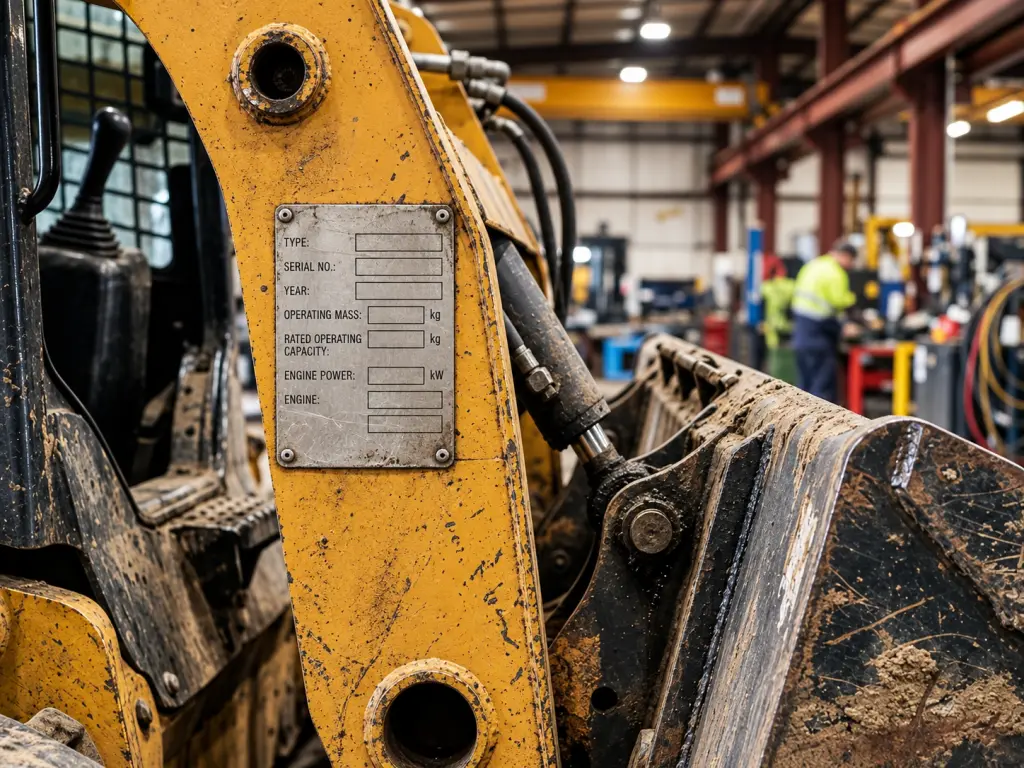
35% is an industry convention, not a law of physics. It exists because the static tipping test doesn’t capture dynamic conditions: a sudden stop, an uneven dip in the ground, a side slope. Building in that margin keeps a machine stable in motion, not just sitting still on a flat pad.
Larger wheeled skid steers and ISO-rated machines often use 50% instead. Under ISO 14397-2, a machine with a 2,794 kg tipping load carries a rated operating capacity of 1,397 kg, which is exactly half. Wider wheelbases and different weight distribution on larger wheeled loaders allow that looser ratio.
| Tipping Load | ROC at 35% | ROC at 50% |
|---|---|---|
| 1,430 lb | 500 lb | 715 lb |
| 2,000 lb | 700 lb | 1,000 lb |
| 2,898 lb | 1,014 lb | 1,449 lb |
| 2,794 kg | 978 kg | 1,397 kg |
| 3,503 lb | 1,226 lb | 1,752 lb |
Treat this as a starting assumption, not gospel. Always confirm the published ROC on the specific machine’s spec sheet before trusting a calculated number over the manufacturer’s own figure.
Not within their rated operating capacity on flat ground, no. But several real-world conditions chip away at that margin fast: side slopes, sudden direction changes, loads carried high instead of low, and soft or uneven ground that shifts the machine’s effective center of gravity mid-task.
Track machines generally sit lower and spread the load across a wider footprint than wheeled minis of similar size, which adds a cushion of stability. That’s not a license to ignore ROC, though. It’s extra margin for error, not a reason to push closer to the tipping number.
Ground pressure plays a quieter role here. A machine with low ground pressure, in the range of 3 PSI for some compact models, resists sinking into soft soil. That matters because a machine that’s sinking unevenly on one side is already tilting before the load even moves, which erodes stability in a way the static tipping spec never accounts for.
With remote-control operation, the operator isn’t on board to feel the machine tilting through the seat or the controls. That sensory feedback a ride-on operator relies on simply isn’t there. The operator has to substitute visual cues, like a track edge lifting slightly or a load swaying, for the seat-of-the-pants feedback they’d otherwise get, which takes more conscious attention on slopes or uneven ground than most people expect going in.
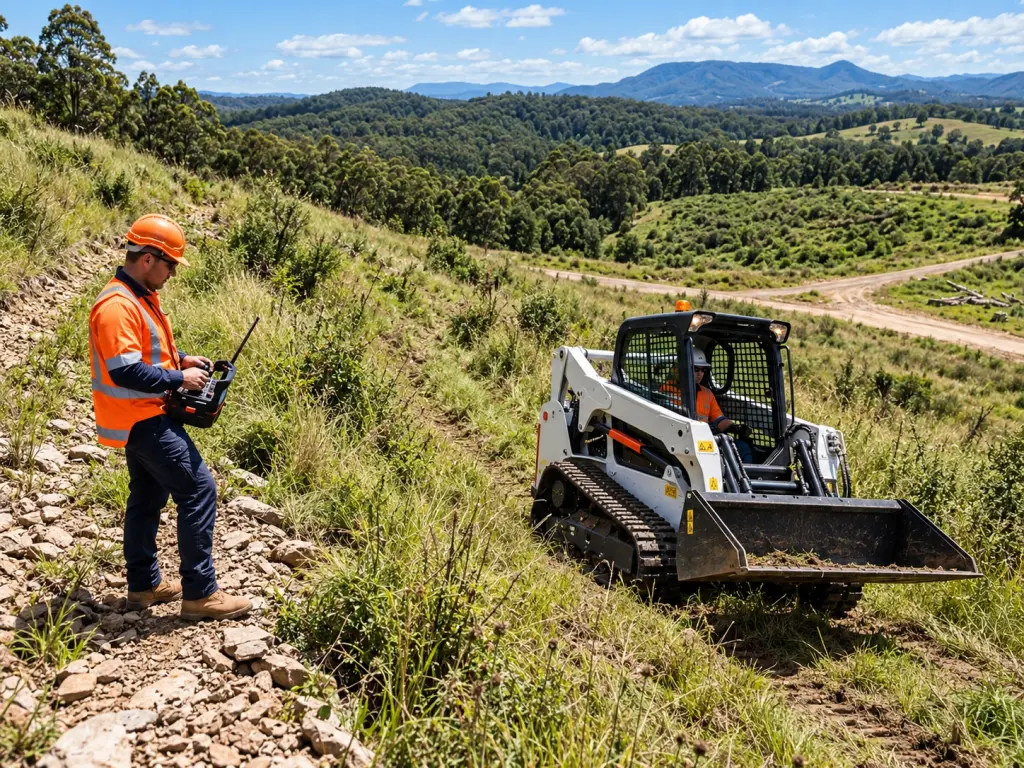
Tipping load is measured on level ground. The moment you introduce a side slope or an uphill grade, the effective safe load drops well below the published ROC, even though the spec sheet number hasn’t changed.
Practical fix: keep the heaviest end of the machine oriented uphill, and keep loads as low to the ground as possible while traveling. This isn’t new advice, tree-care operators have said it for years, but it’s worth tying directly back to the math. A load that’s safely within ROC on flat ground can push past the real stability margin the instant the ground tilts.
Remote-control track mowers and mini skid steers change this equation in a useful way. The operator can stand at a safe distance and a better viewing angle, away from the machine’s own tilt and weight. On a slope, a ride-on operator’s body weight and seating position actually shifts the center of gravity further, something remote operation removes from the equation entirely. For more on how this plays out specifically on slope work, see common slope mowing mistakes remote control mowers eliminate.
For steep or uneven terrain, orchard rows, forestry clearing, choosing a track undercarriage over wheels widens the stability base without touching the rated tipping load itself. See the tradeoffs in Track vs Wheel Skid Steer: Which One Fits Your Jobsite Best.
Anqun manufactures track mowers, mini skid steer loaders, and attachments including a mini skid steer ripper and trench backfiller, built for these mixed-load scenarios. Bundled starter kits by use case, landscaping, farming, and property maintenance, make it easier to match attachment weight to the carrier’s ROC from the start rather than guessing after the fact.
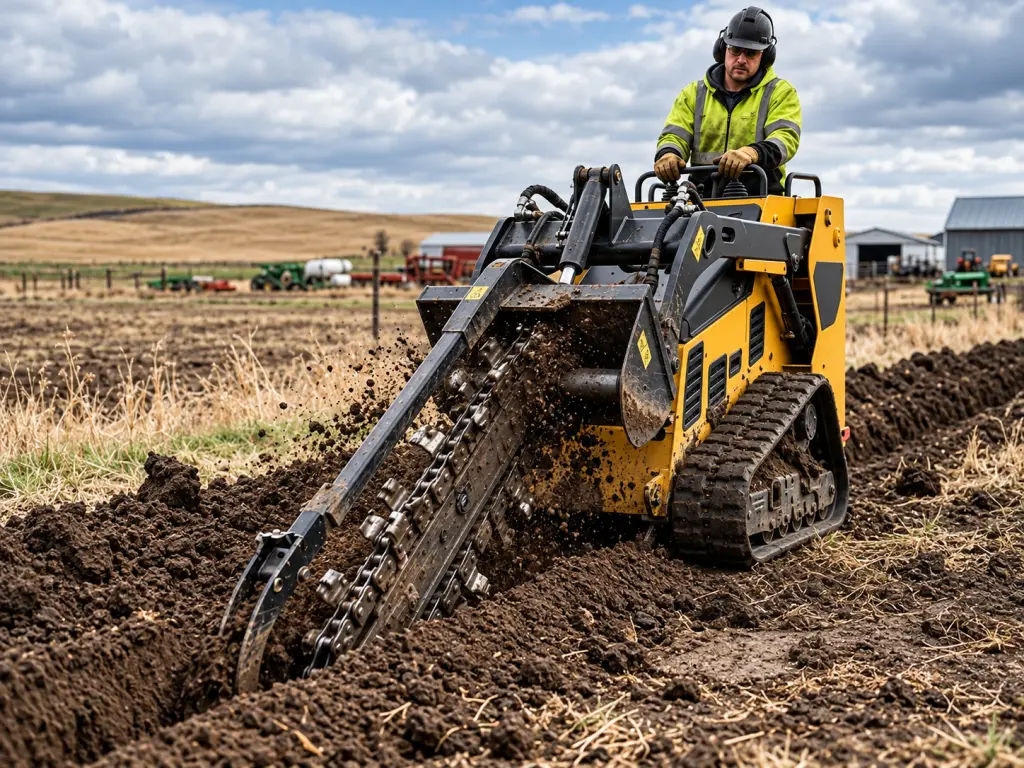
Spec sheets from different brands rarely present tipping load the same way, which makes side-by-side comparisons risky if you don’t check the method behind the number first.
First, confirm whether the published ‘rated capacity’ is already calculated at 35% or 50% before comparing it against a competitor’s raw tipping load figure. Mixing a calculated ROC from one brand with a raw tipping load from another produces a comparison that looks favorable but isn’t real.
Second, ask which test standard was used, ISO 14397-2 or a manufacturer-specific method. The testing method affects how comparable the resulting number actually is across brands, especially when sourcing at volume.
Third, for OEM/ODM sourcing specifically, confirm whether protective features or other configuration choices add weight to the machine, since added weight shifts the operating weight and the stability margin that comes with it. Anqun’s OEM/ODM configuration options include engine choice, protective features, and control setup, so it’s worth asking any supplier how their specific options affect total operating weight before finalizing a spec.
Finally, don’t assume a smaller footprint machine is automatically less capable. Check the ROC-to-footprint ratio against the actual job. For confined sites, the PSH100 is described as one of the smallest compact tracked skid steer options available, which matters more for tight landscaping or orchard rows than raw tipping load alone. See how different models compare by task in Most Popular Skid Steer Choices Based on How They’re Used.
Before you buy or load, run this checklist: find the published tipping load, confirm whether the ROC is calculated at 35% or 50%, subtract the attachment’s own weight before adding material, and account for slope and ground conditions before trusting the flat-ground number at face value.
Anqun designs and tests its mini skid steer loaders and attachments with full functional inspection before shipment, covering drive, hydraulics, controls, and safety checks, so the numbers on the spec sheet reflect a machine that’s been checked end to end rather than a theoretical figure.
Buyers sourcing for landscaping, orchard, construction, or forestry work can request manuals and parts lists on OEM/ODM orders to confirm rated capacities before committing to a purchase. If you’re still weighing which loader class fits your workload, the earlier guide on choosing the right mini skid steer loader for your business is a good next read.
Reach out to Anqun to match tipping load and ROC specs to the attachment bundle and application you actually need, whether that’s a ripper for orchard soil prep or a trench backfiller for construction sites.
Tipping capacity is another name for tipping load: the maximum weight placed in the bucket at full height and reach that would lift the rear of the machine off the ground. It’s a static, flat-ground measurement, not the weight you should actually carry during operation.
This isn’t a standard industry term for skid steers; the widely published convention is the 35% rule, where rated operating capacity equals 35% of tipping load for mini skid steers (50% for larger wheeled machines under ISO 14397-2). Always check the manufacturer’s published ROC rather than assuming a fixed ratio.
50% of tipping load is the rated operating capacity standard used for larger wheeled skid steers under ISO 14397-2, rather than the stricter 35% used for compact track loaders and mini skid steers. Their wider wheelbase and different weight distribution allow a looser safety ratio.
Not within rated operating capacity on flat ground, but side slopes, high-carried loads, sudden direction changes, and soft or uneven ground all erode that stability margin quickly. Track undercarriages and low ground pressure help, but respecting ROC matters more than relying on the machine’s natural stability.
 Guides
 Guides
 Guides
 Guides
 Guides
 Guides