Track Mower & Skid Steer Loader Manufacturer

Contact Us
Track Mower & Skid Steer Loader Manufacturer
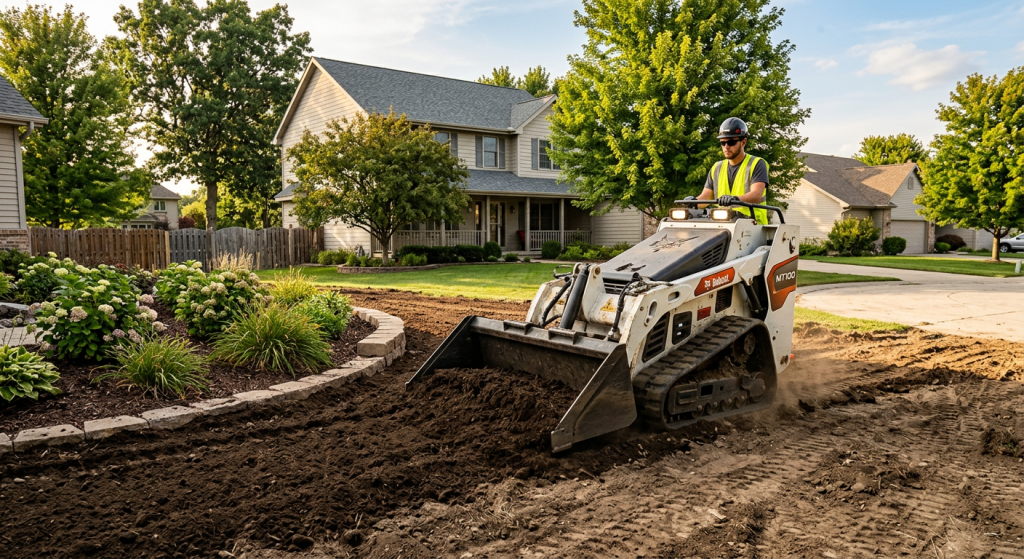
A mini skid steer loader is one of the most versatile machines for landscaping operations, capable of operating a wide range of attachments—from buckets and rippers to hydraulic breaker attachments for clearing rocky or concrete-heavy sites. The key is matching your machine's rated operating capacity, undercarriage type, and hydraulic flow to the specific jobs your crew runs every week. Get these three decisions right, and a compact skid steer will pay for itself within a single busy season.
| Criteria | Tracked Mini Skid Steer | Wheeled Mini Skid Steer |
|---|---|---|
| Best Terrain | Soft soil, slopes, uneven ground | Hard surfaces, pavement, gravel |
| Ground Pressure | Low — minimal turf damage | Higher — may mark soft lawns |
| Maneuverability | Excellent on rough or uneven terrain | Faster and more agile on flat ground |
| Maintenance | Requires monitoring of track wear and tension | Simpler — mainly tire replacement |
| Typical Landscaping Use | Slope grading, soft lawn work, orchard access | Hardscape work, paving, debris clearing |
Undercarriage choice is the first and most consequential decision for landscaping buyers. The comparison table above summarizes the core trade-offs, but here's the practical read:
Rubber tracks spread the machine's weight across a larger footprint, keeping ground pressure low enough to work on freshly seeded lawns or saturated soil without leaving ruts. If your crews regularly work on residential turf, sloped properties, or soft ground after rain, a tracked model is the safer choice. Our compact skid steer loader range covers this segment well.
Wheeled skid steer loader excel on hardscape — paving projects, gravel driveways, and concrete surfaces where tire traction is reliable and speed matters. Wheeled machines can also be repositioned between sites more quickly. For contractors dividing time between hardscape and soft-ground work, consider keeping one of each or choosing solid rubber tracks as a middle-ground option.
For a deeper comparison, see our earlier post on track vs. wheel skid steer selection.
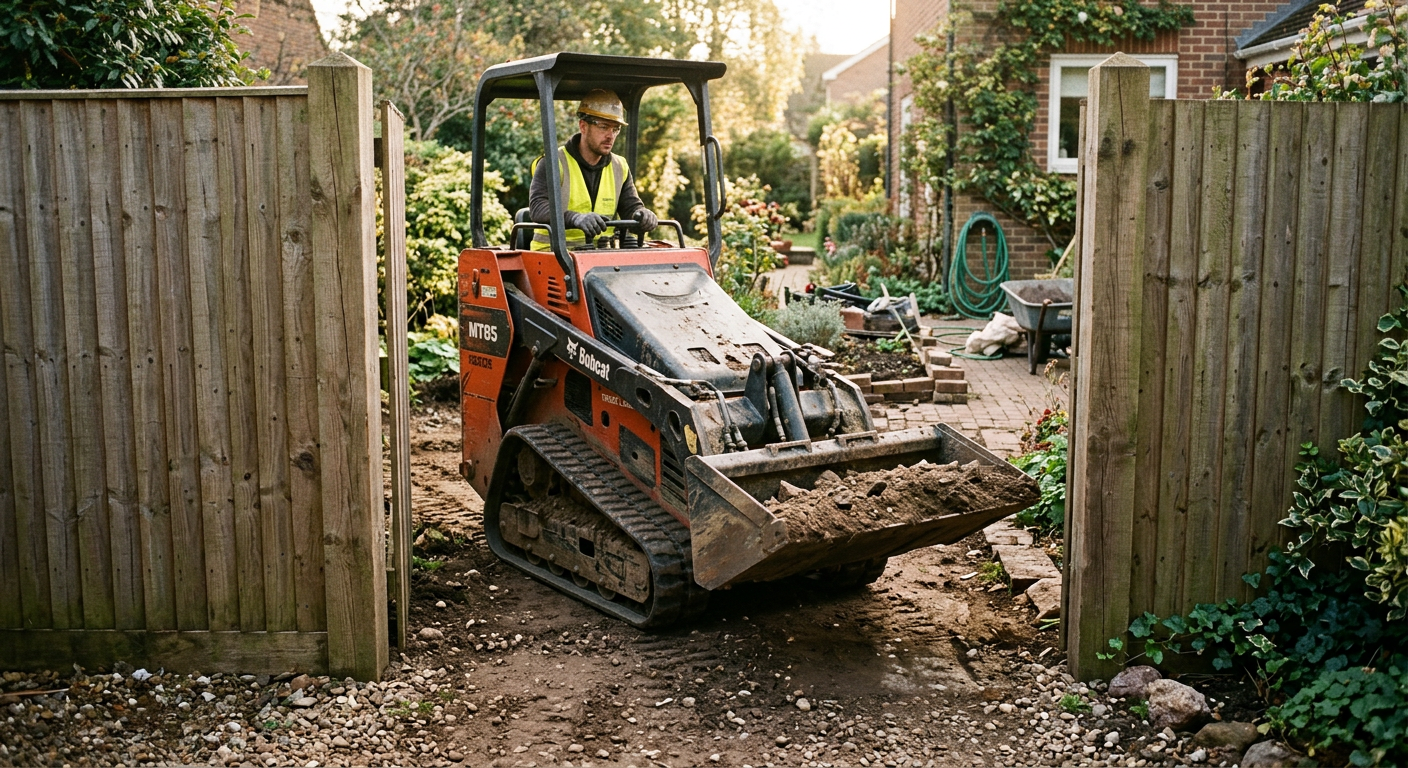
Beyond undercarriage, three specifications determine whether a mini skid steer can handle your landscaping workload without excessive strain:
For a broader look at how these specs translate across popular models, the post on popular skid steer choices by use case is a useful reference.
A well-chosen attachment set turns a single machine into a year-round revenue tool. Here are the attachments most relevant to landscaping contractors:
Contractors who want to generate revenue in the off-season should look at the mini skid steer snow blower and snow plow attachments, which convert the same machine into a winter maintenance unit with minimal downtime between seasons.
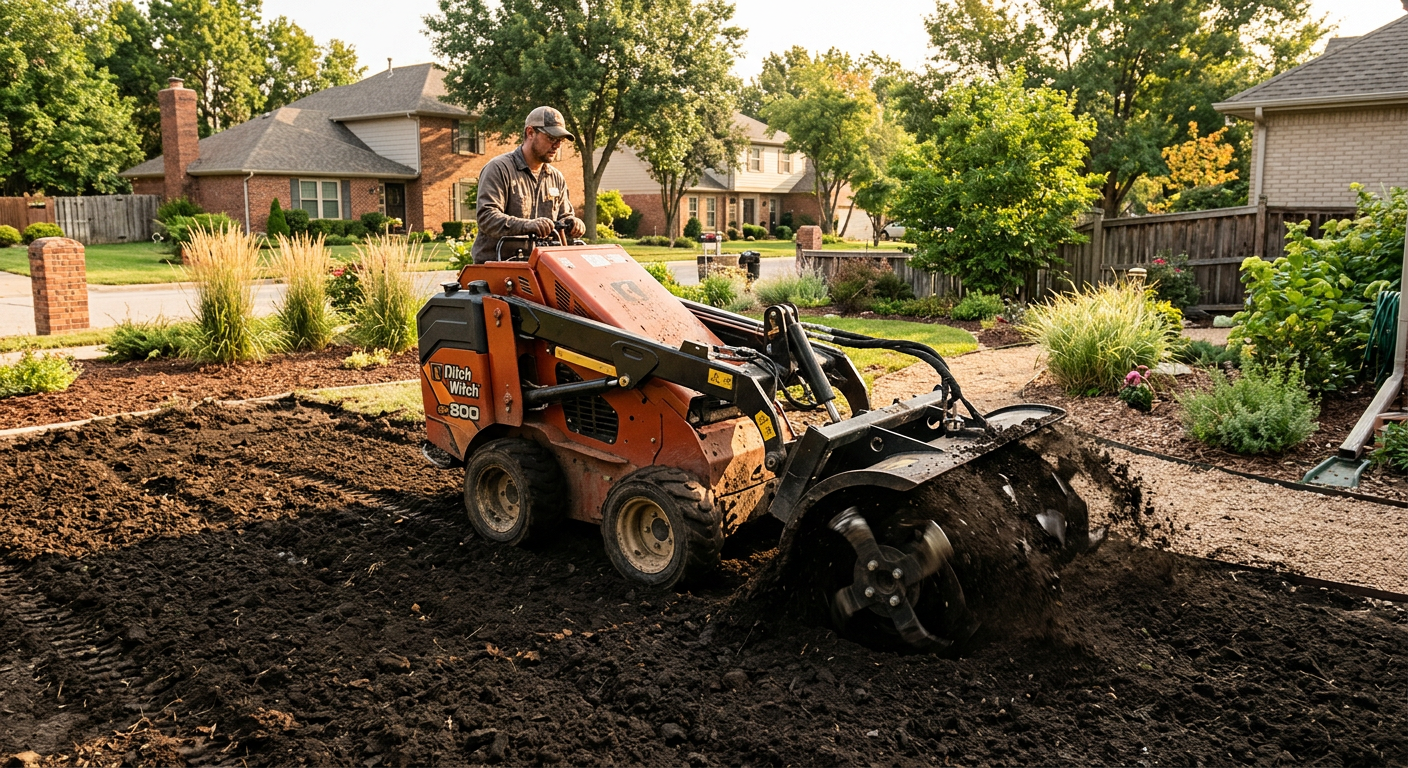
Consider a mid-size landscaping company running residential and commercial maintenance contracts across a suburban region. Their core challenge: a diverse job mix that includes new lawn installations, garden bed prep, gravel driveway work, and winter snow clearing — all with access constraints at gated properties.
Their solution was a tracked mini skid steer (850 mm wide, 500 kg ROC) paired with a four-attachment rotation: rotary plow for spring soil prep, rock bucket for grading and cleanup through summer, drum spike aerator for autumn turf services, and a snow blower for winter contracts. The single machine replaced a walk-behind tiller, a dedicated aerator, and a standalone snow blower — reducing trailer space and equipment overhead substantially.
The tracked undercarriage meant they could work on residential lawns immediately after rain without rescheduling, which alone reduced lost-day costs by an estimated 15–20% across the wet season. This kind of multi-attachment strategy is exactly what the landscaping applications page at Anqun covers in more detail.
Before placing an order, work through this short checklist to avoid mismatches:
Anqun Machinery's full range of mini skid steer attachments is designed to be compatible across the machine lineup, making it straightforward to expand your attachment collection as your operation grows. If you're ready to discuss specifications or request a quote, the team at Anqun Machinery can help you match the right machine and attachment combination to your specific workload.
 Guides
 Guides
 Guides
 Guides
 Guides
 Guides