Track Mower & Skid Steer Loader Manufacturer

Contact Us
Track Mower & Skid Steer Loader Manufacturer
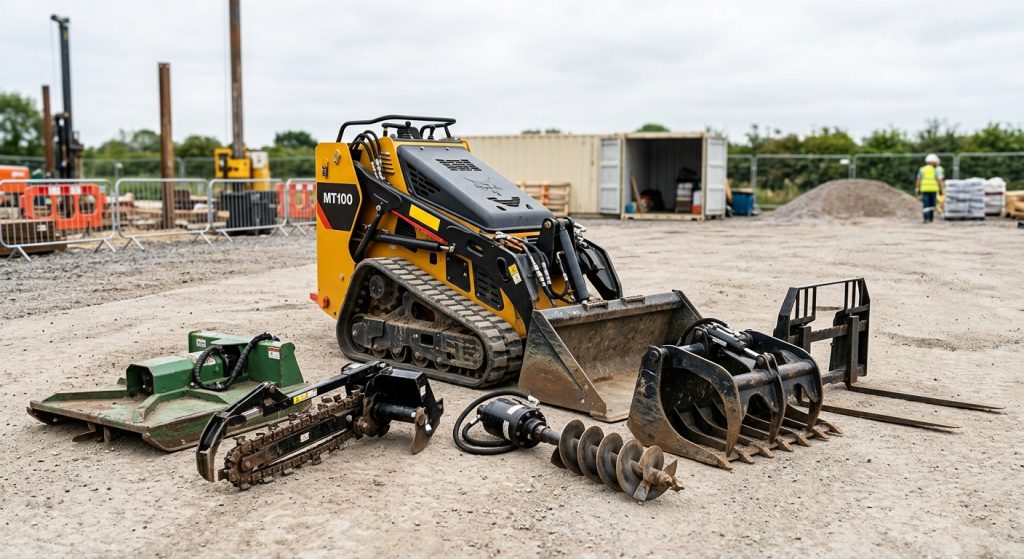
A mini skid steer fitted with a universal quick-change coupler can genuinely replace five dedicated machines on your job site — swap in a ripper attachment, auger, sweeper, or a snow plow attachment in seconds. By switching between compatible attachments in under a minute, one machine can handle tasks that might otherwise require a brush mower, trencher, auger, grapple, and pallet fork. The coupler standardizes the mechanical and hydraulic interface, allowing operators to move quickly from digging to trench backfilling and other tasks on a stand-on mini skid steer.
The savings aren't theoretical: contractors can cut equipment costs by 60–70%, reduce trailer trips, and enable a single operator to handle multiple types of work. Below, we'll explain how the system works, where it shines, and where it doesn't.
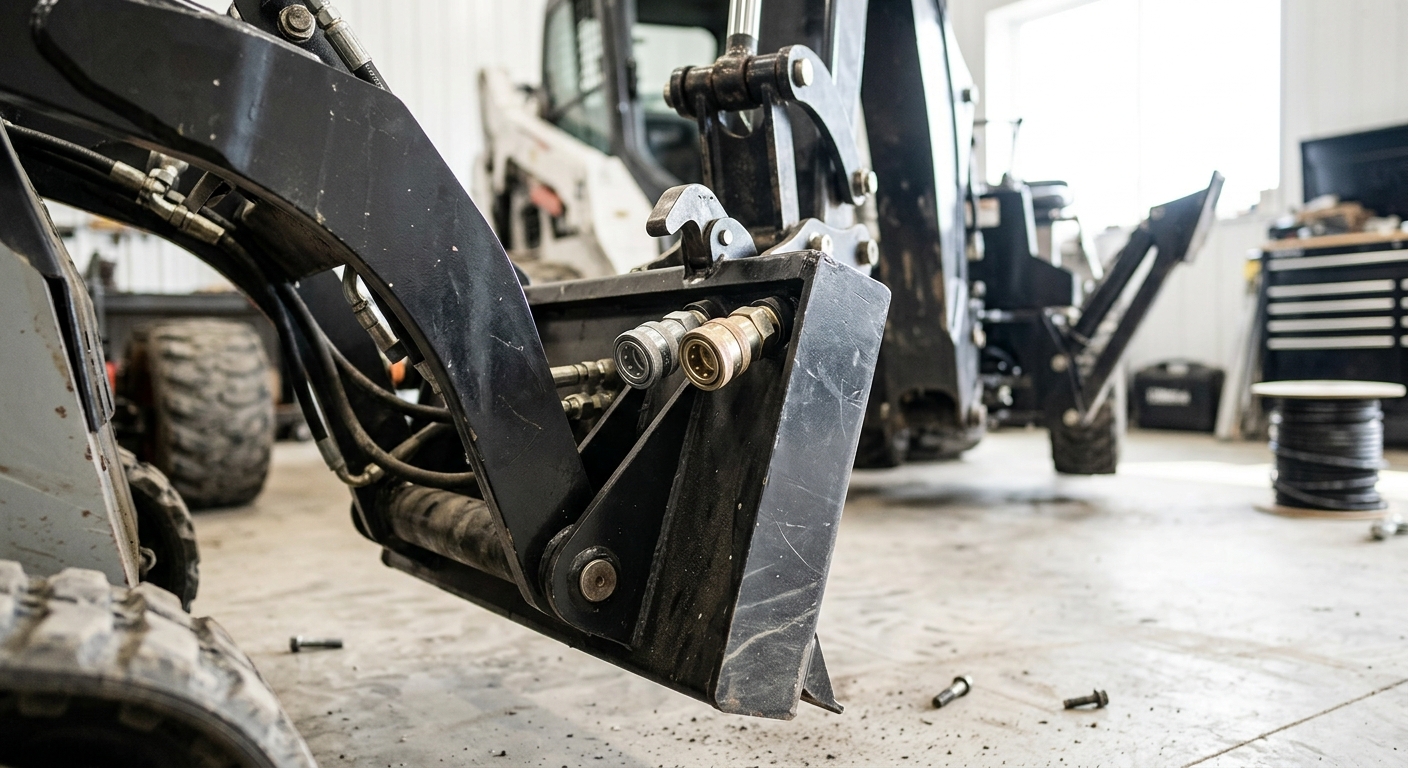
The quick-change concept rests on two standards working together: a mechanical interface (the universal skid steer coupler plate) and a hydraulic interface (flat-face or poppet-style couplers rated for the machine's auxiliary flow). When both align, any attachment built to that standard fits any host machine built to that standard. That's the magic.
The mechanical plate is governed by a widely adopted profile — two upper hooks that catch a top rail on the attachment, plus two locking pins (manual or hydraulic) that drive through the lower receiver holes. On most mini skid steers the plate measures roughly 762 mm (30 in) wide, sized down from the full-size 1,143 mm (45 in) standard. This is why a full-size loader bucket will not fit a mini — the plates look similar but aren't interchangeable.
The hydraulic side carries 8–25 GPM of auxiliary flow at 2,500–3,500 PSI on most compact units, which is enough to run augers, trenchers, brush cutters, and tillers without the engine bogging. Anything more demanding — a cold planer or large mulcher — needs a high-flow circuit, and that's a spec to confirm before promising a customer multi-tool capability.
You can also compare our full mini skid steer attachments to match one machine with digging, mowing, trenching, sweeping, and material handling tasks.
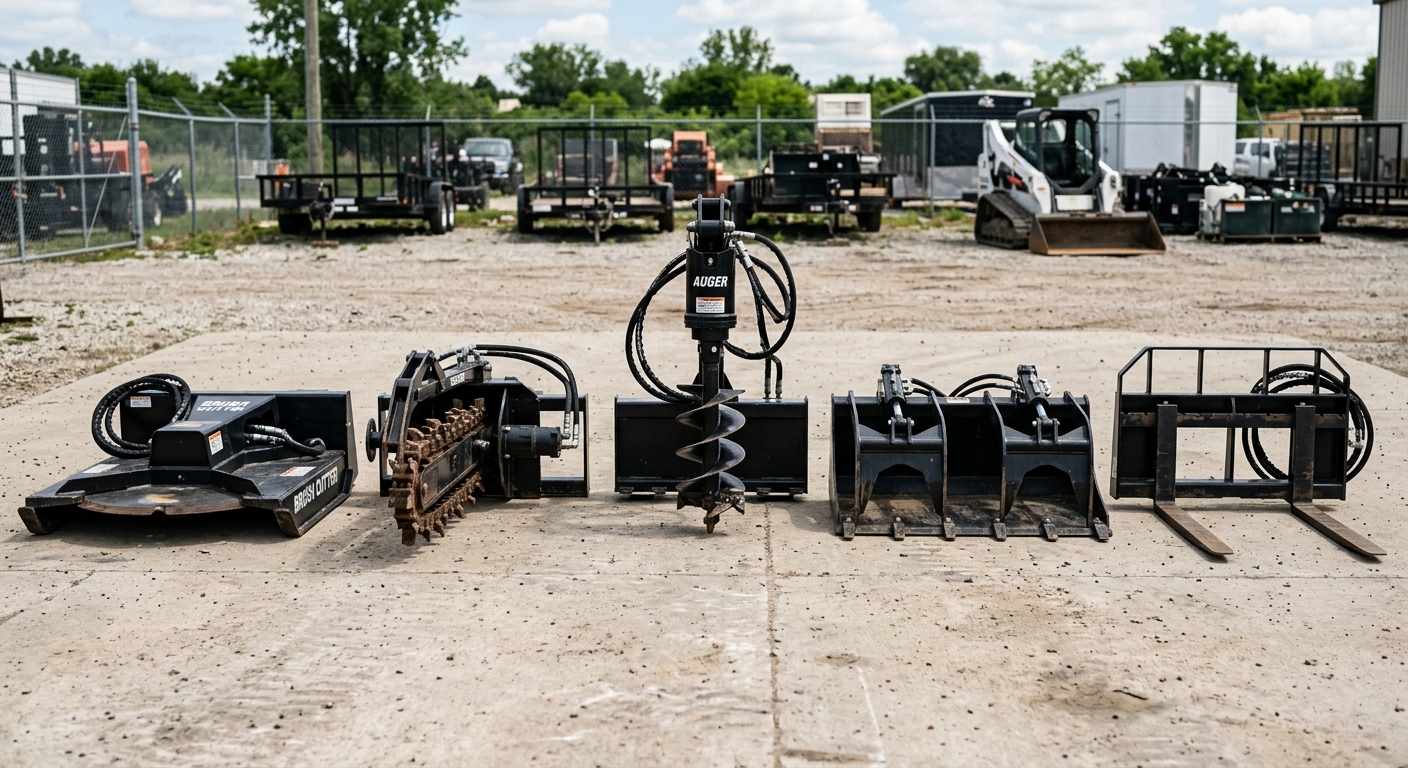
Here's the lineup that justifies the “five machines in one” claim. None of these are exotic — they're the workhorses of landscaping, property maintenance, and light construction.
A 36–44 in brush cutter attachment running on 11–17 GPM aux flow will drop saplings up to 2 in thick. With remote-control track loaders, the operator stands off the slope entirely — safer than any walk-behind on a 25° bank.
Trencher attachments cut 4–6 in wide trenches to 36 in deep. For irrigation mainlines or low-voltage runs, this replaces a dedicated ride-on trencher that costs $18,000–$25,000 new.
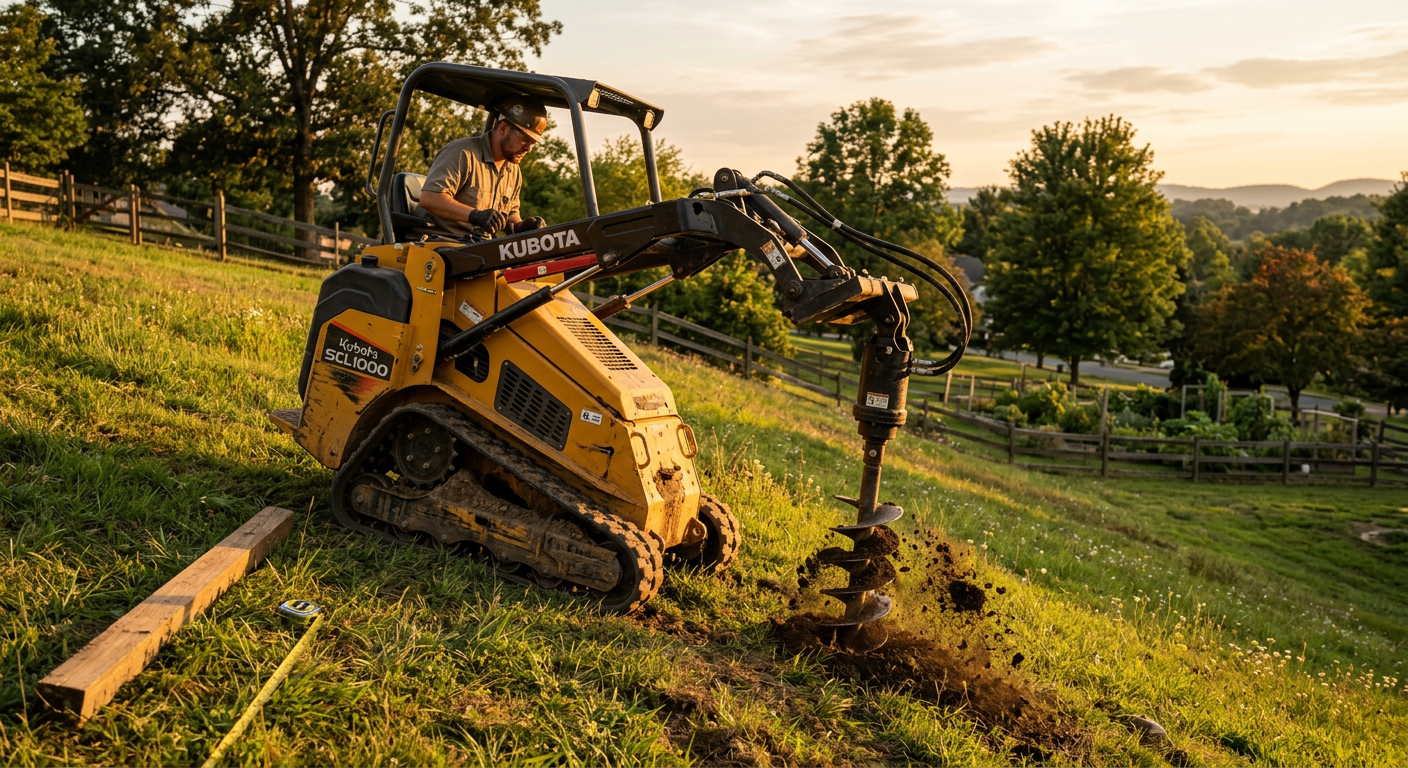
Auger attachments with 6, 9, 12, and 18 in bits drill fence posts, deck footings, and tree pits. A 12 in bit at 200 ft-lb pulls clean holes in compact soil all day.
The single attachment that earns its keep faster than any other. Loads brush, demo debris, rocks, and rootballs that a plain bucket can't grip.
Skip the forklift rental. Mini skid steer forks handle 450–900 kg loads — enough for sod pallets, paver bundles, and most landscape material drops.
For instance, a property maintenance firm in the Carolinas swapped a fleet of three dedicated machines plus a rented forklift for a single tracked mini loader and these five attachments. Their annual equipment-finance bill dropped from $42,000 to $11,000, and they eliminated two trailer trips per week.
Most buyers fixate on horsepower. They should be looking at auxiliary hydraulic flow and pressure, because that's what determines which attachments will actually work, not just bolt on.
If you're sourcing equipment for a rental fleet or OEM project, demand a published flow/pressure chart and confirm the case drain port exists. A loader without a case drain locks you out of the most profitable attachment category — mulching.
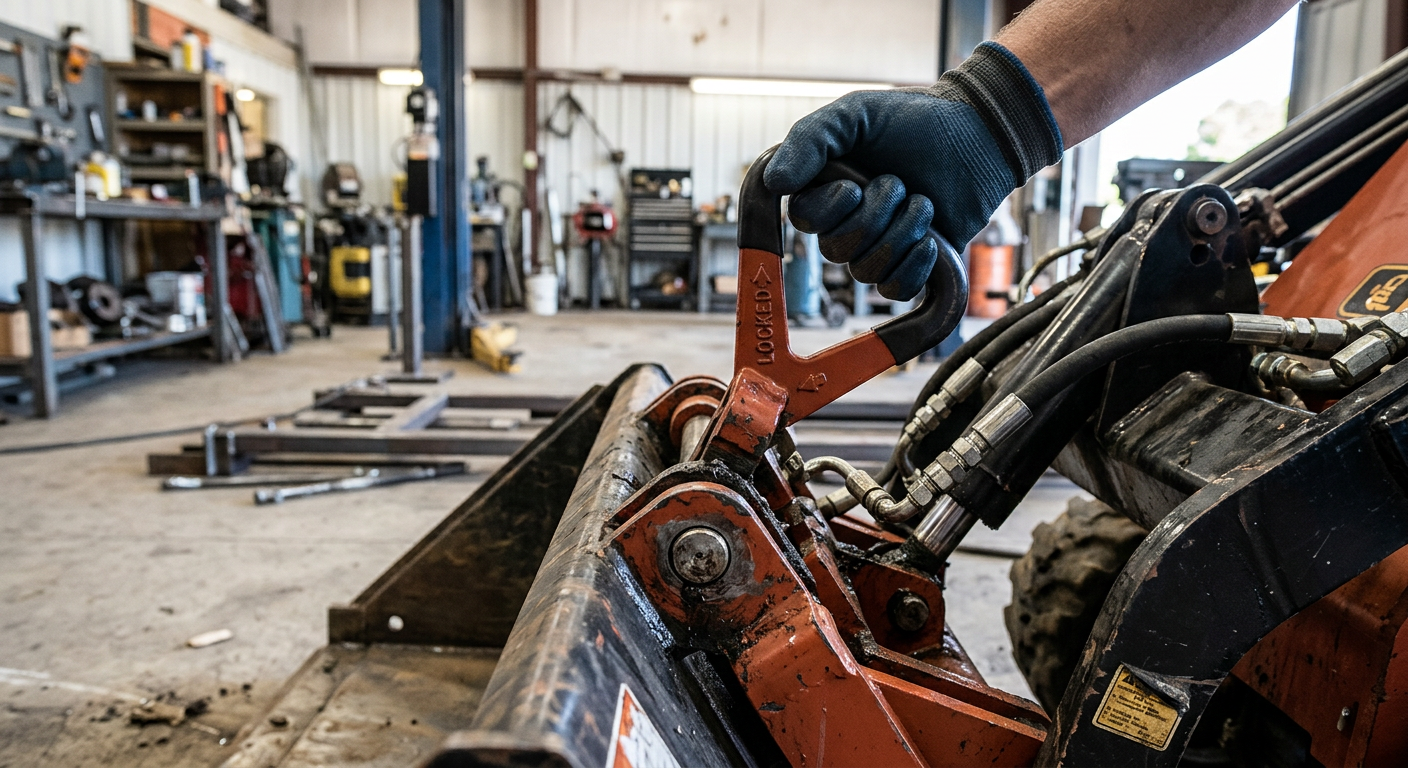
A trained operator swaps attachments in 30–60 seconds with a hydraulic coupler, or 60–90 seconds with a manual pin coupler. That's the headline number. In practice, three things kill swap speed:
If the attachment was last used under load, residual pressure traps the flat-face couplers. The fix is a pressure-release lever on the loader's aux circuit — a $40 part that saves operators ten minutes of cursing per day.
Mud and grit on flat-face couplers cause leaks and chewed seals. Best practice: cap every coupler the moment an attachment comes off. Issue caps with every attachment you sell or rent.
New operators tilt the coupler too far back, hook only one side of the rail, and force the pins. After a week, the plate is bent. Train operators to approach with the coupler tilted forward about 15°, drive in until the hooks catch the top rail evenly, then curl back and pin.
Honest answer: the multi-tool approach loses to dedicated machines when the job is single-task and high-volume. If you're trenching 4,000 linear feet a week, buy a real trencher — the attachment will overheat the aux circuit and the duty cycle will eat couplers.
Other scenarios where you want a dedicated machine:
The mini skid steer wins when the day's work is varied: pull a few stumps, trench a line, drill some footings, move pallets, clean up. That's the profile of 80% of landscaping and property management work — and exactly why this category is growing.
Tracks win for attachment versatility, period. Here's why: ground pressure on a tracked mini loader runs 3–5 PSI versus 25–40 PSI on a wheeled unit. That matters because hydraulic attachments transfer reaction forces back into the chassis — augers torque sideways, trenchers want to climb out of the cut, grapples shift loads off-center. Tracks anchor the machine; wheels skid.
Tracks also let you keep working on wet turf and slopes, which expands the calendar for landscaping crews by 4–6 weeks a year in temperate climates. The trade-off is track wear and slower travel speed on pavement. For a deeper look, see our breakdown on track vs wheel skid steers and the practical lifespan of mini skid steer tracks.
Whether you're buying one machine or specifying a container for a distributor program, this is the checklist that prevents expensive surprises.
Browse our compact equipment catalog or review the full mini skid steer buying guide for sizing the platform to your work mix.
Let's put concrete figures behind the theory. A typical 5-person residential landscaping outfit doing installs, maintenance, and small hardscape work:
Total capital + annual rental year one: ~$89,400.
Total: ~$45,900 — roughly half the traditional setup, on one trailer, operated by one person at a time. Even accounting for slower per-task speed on dedicated work, the multi-attachment platform pays back in 14–18 months for most crews. That's the technical and financial argument in one paragraph.
Quick-change attachments aren't a gimmick — they're a structural shift in how compact equipment delivers value. The mini skid steer becomes a hydraulic power source on tracks, and every attachment in your inventory multiplies what that power source can earn. Get the coupler standard right, get the aux flow spec right, and stock the right five attachments for your work mix. The fleet shrinks, the trailer lightens, and the per-job margin climbs.
If you're sourcing equipment for a dealer network, rental fleet, or contracting business, we build mini skid steers and matched attachments under OEM and ODM programs with CE documentation for export. Reach out through our contact page or browse the full applications library to see how partners are putting these platforms to work.
 Guides
 Guides
 Guides
 Guides
 Guides
 Guides