Track Mower & Skid Steer Loader Manufacturer

Contact Us
Track Mower & Skid Steer Loader Manufacturer
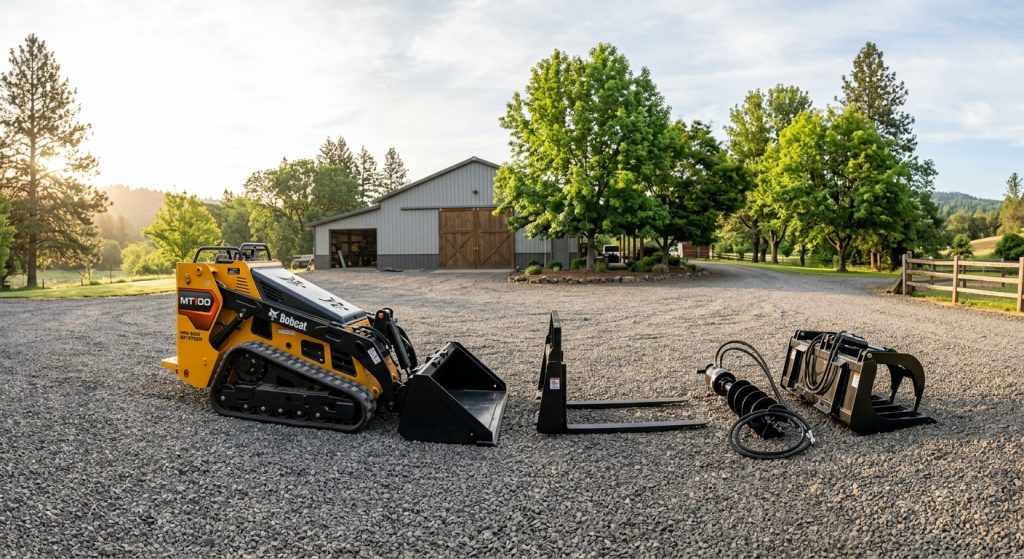
The nine attachments that earn their keep on a mini skid steer are the standard bucket, pallet forks, auger, trencher, and — for demolition and site prep — a hydraulic breaker attachment. Together, they turn a single compact machine into a year-round revenue tool — but only if you match each attachment to the right job, ground conditions, machine capacity, and hydraulic flow requirements. Below is a practical breakdown of when each attachment belongs on your machine and when another tool may be the better choice.
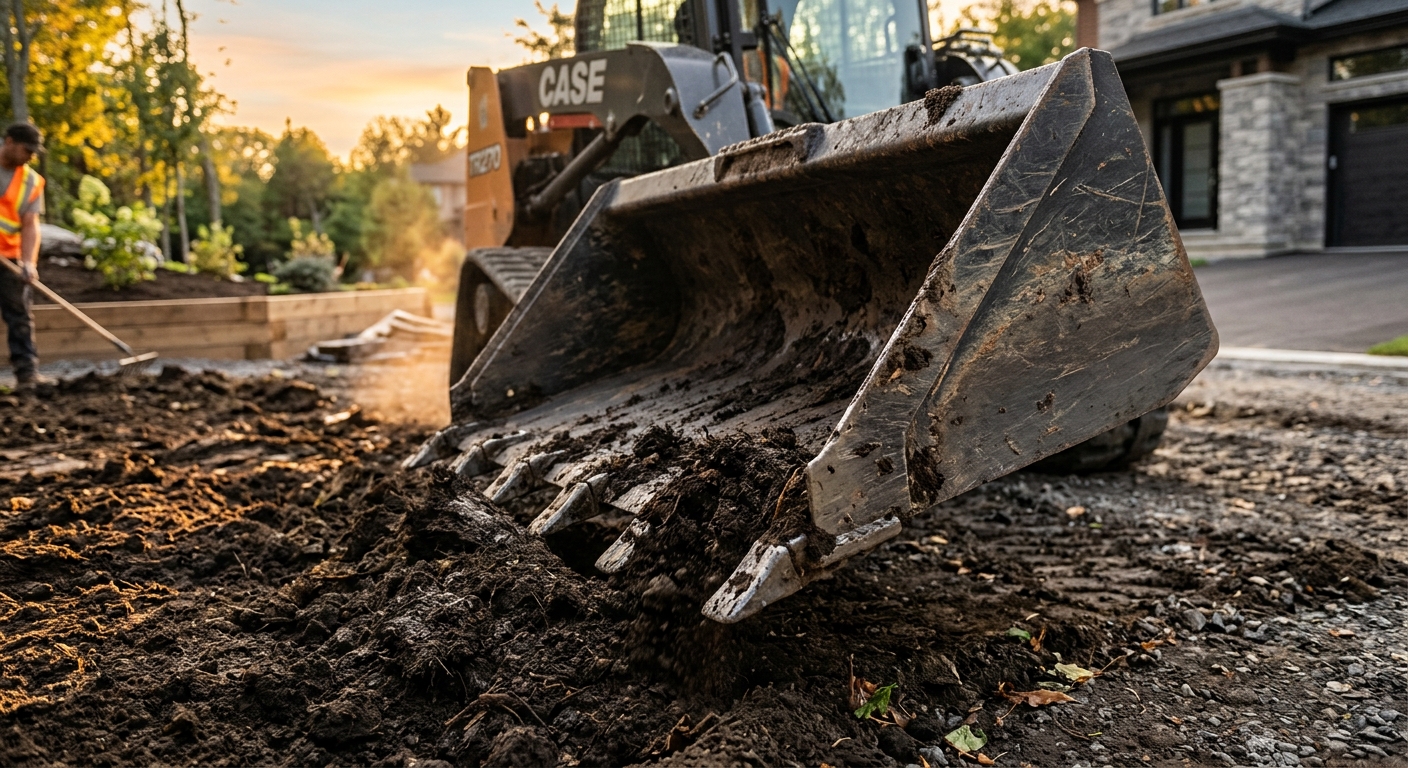
If you only buy one attachment, make it the bucket. It does 60–70% of the work most operators throw at a mini skid steer: moving topsoil, hauling gravel, loading mulch, backfilling trenches, and grading rough surfaces.
Look for a bucket width that matches your machine's track width — too wide and you'll snag on tight gates and pathways, too narrow and you waste passes. A 36–42 inch bucket is the sweet spot for most 1,000–1,500 lb machines.
Heavy clay, wet sticky soils, and rocky fill all chew up standard buckets. For those jobs, a low-profile bucket with bolt-on cutting edges (or a 4-in-1 bucket) is worth the upgrade. For example, a landscaper backfilling around a new patio in clay-heavy soil will get cleaner dumps from a smooth-bottom bucket than from a toothed one.
Pallet forks turn your mini skid steer into a jobsite forklift. They move sod rolls, bagged concrete, paver pallets, irrigation supplies, hay bales, and bundled fencing without a scratch — and they require zero hydraulic flow, so they work on any machine.
The real value shows up in delivery scenarios. A landscaping crew that used to spend 45 minutes hand-unloading a sod truck now offloads 20 pallets in under 10 minutes. That's labor cost recovered on a single job.
One warning: mini skid steers have shorter wheelbases than full-size loaders, so always check your tipping load rating before lifting anywhere near capacity.
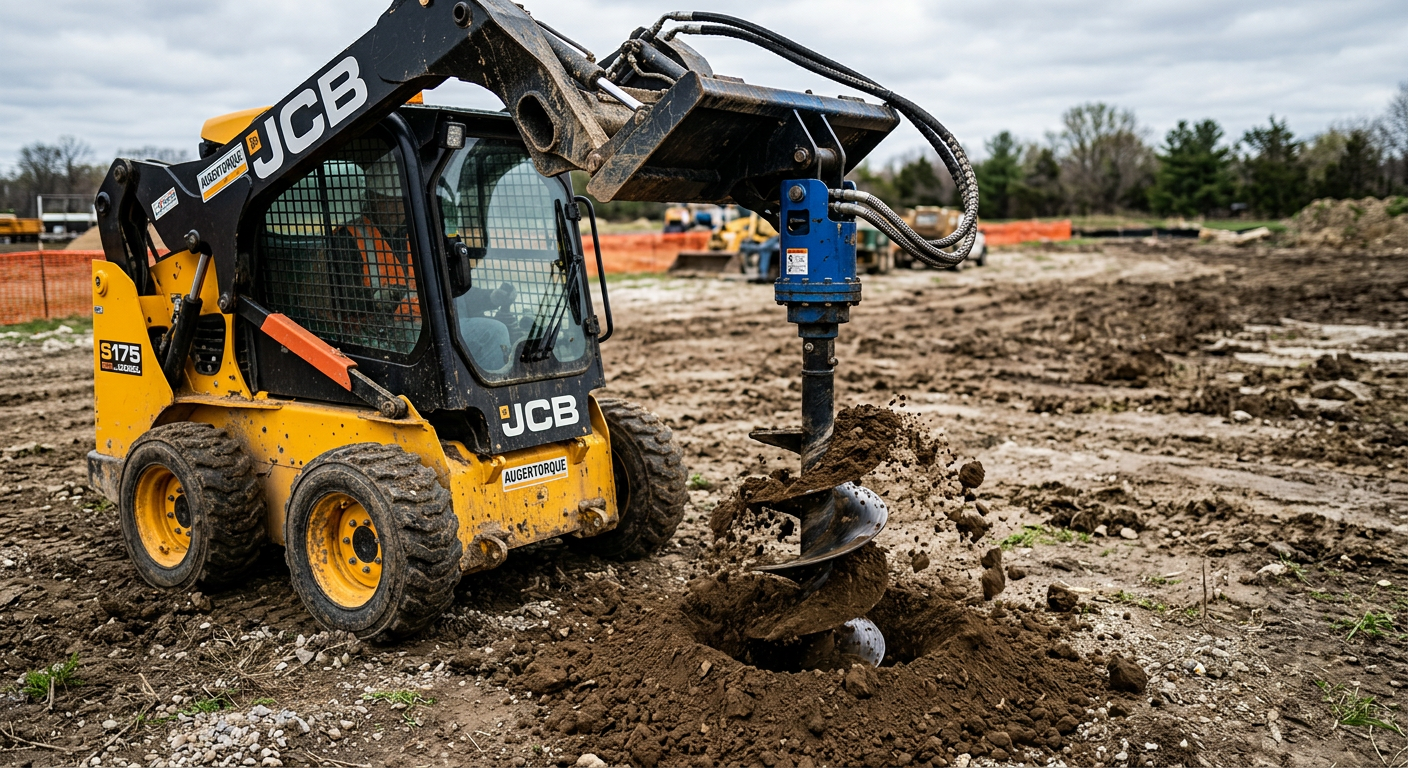
An auger attachment will dig a 12-inch post hole in 30–60 seconds. Compare that to a manual post-hole digger taking 10–15 minutes per hole, and the math gets obvious fast for any fencing contractor or orchard operator.
Match the auger drive to your machine's hydraulic flow. Standard-flow units (around 10–15 GPM) handle bits up to 18 inches in normal soil. For 24–36 inch bits, or rocky and frozen ground, you'll want high-flow plumbing and a heavy-duty drive head.
A general-purpose bit struggles in rocky soil and packs clay. Tree-planting bits have wider flighting for easier soil ejection. Rock bits with carbide teeth are slower but won't strip out on cobble. For instance, an orchard owner planting 200 new fruit trees in a single weekend should pair a tree-planting bit with proper soil prep — see our notes on orchard maintenance with compact track equipment for related ground-prep tips.
A trencher attachment cuts 24–48 inch deep trenches for water lines, electrical conduit, drainage, and irrigation at roughly 10–15 feet per minute in normal soil. Renting a dedicated walk-behind trencher costs $200–400/day; owning the attachment eliminates that line item permanently.
Trenchers are hydraulic-hungry. You need high-flow auxiliary hydraulics (17+ GPM) to run a 4-foot trencher chain at productive speeds. On a low-flow machine, you'll stall constantly and burn out the motor.
Once the pipe, cable, or drainage line is installed, a dedicated mini skid steer trench backfiller can help return excavated soil to the trench more efficiently. It complements the trencher rather than replacing it, making the two attachments a practical combination for utility, drainage, and pipeline work.
A small irrigation contractor in a suburban market installed 1,200 feet of drip line trenching across six jobs in a month. At a typical $4–6 per linear foot, that's revenue a hand crew simply can't match — while mechanizing both trenching and backfilling can reduce the amount of manual soil handling required.
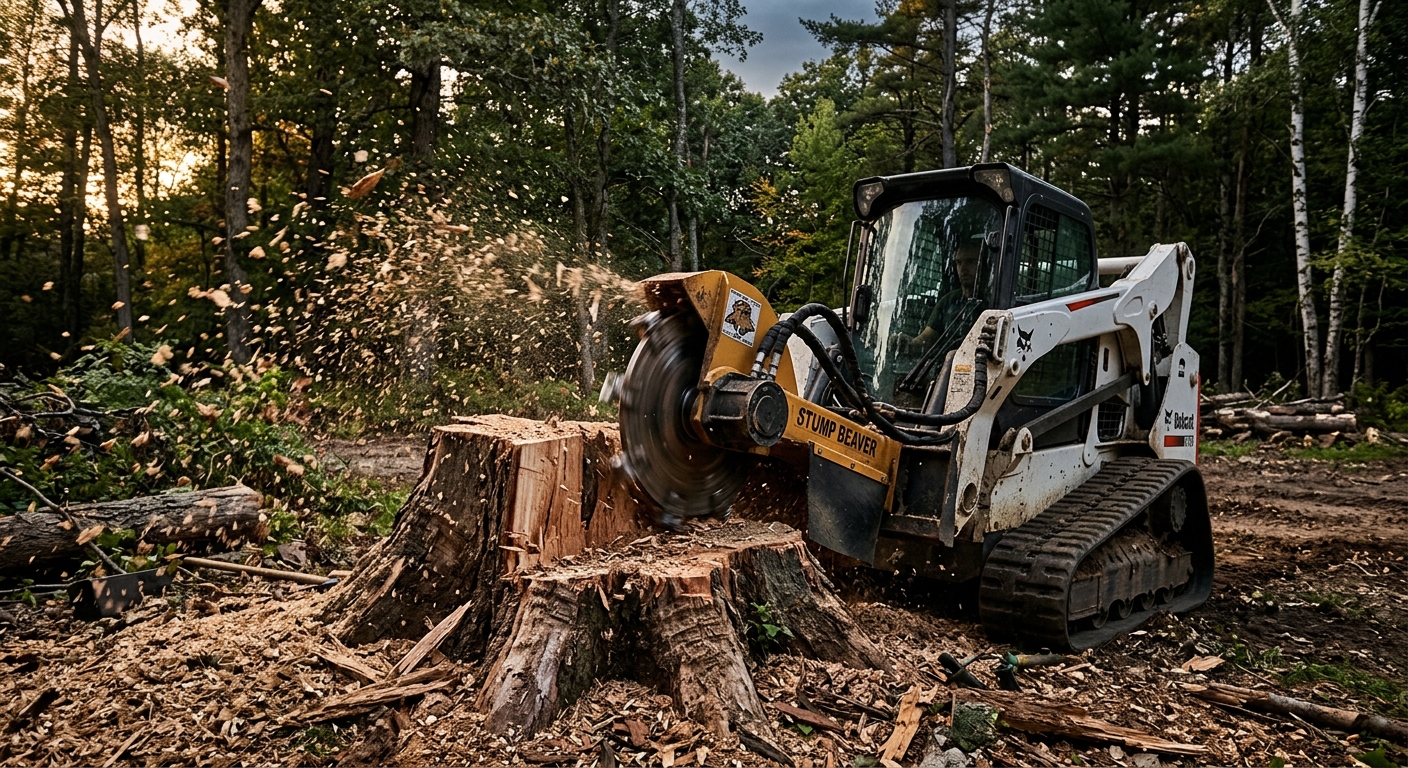
A stump grinder attachment turns a 24-inch oak stump into mulch in 10–20 minutes. For tree services, land-clearing contractors, and property managers handling storm cleanup, the ROI is undeniable — but only if you actually get the volume.
If you grind fewer than 5–10 stumps a month, rent. If you're a tree service knocking out 50+ a month, owning the attachment changes your pricing power overnight because you stop sub-contracting.
Brush cutters mulch saplings up to 3 inches thick, knock down 6-foot-tall weeds, and clear overgrown lots that a traditional mower would simply bounce off of. For property managers and land clearing operators, this is often the attachment that wins them the contract in the first place.
Two main styles:
If you operate on slopes or rough terrain, pair your brush cutter with a track-based machine for stability. We've broken down the stability question in our track vs wheel skid steer comparison.
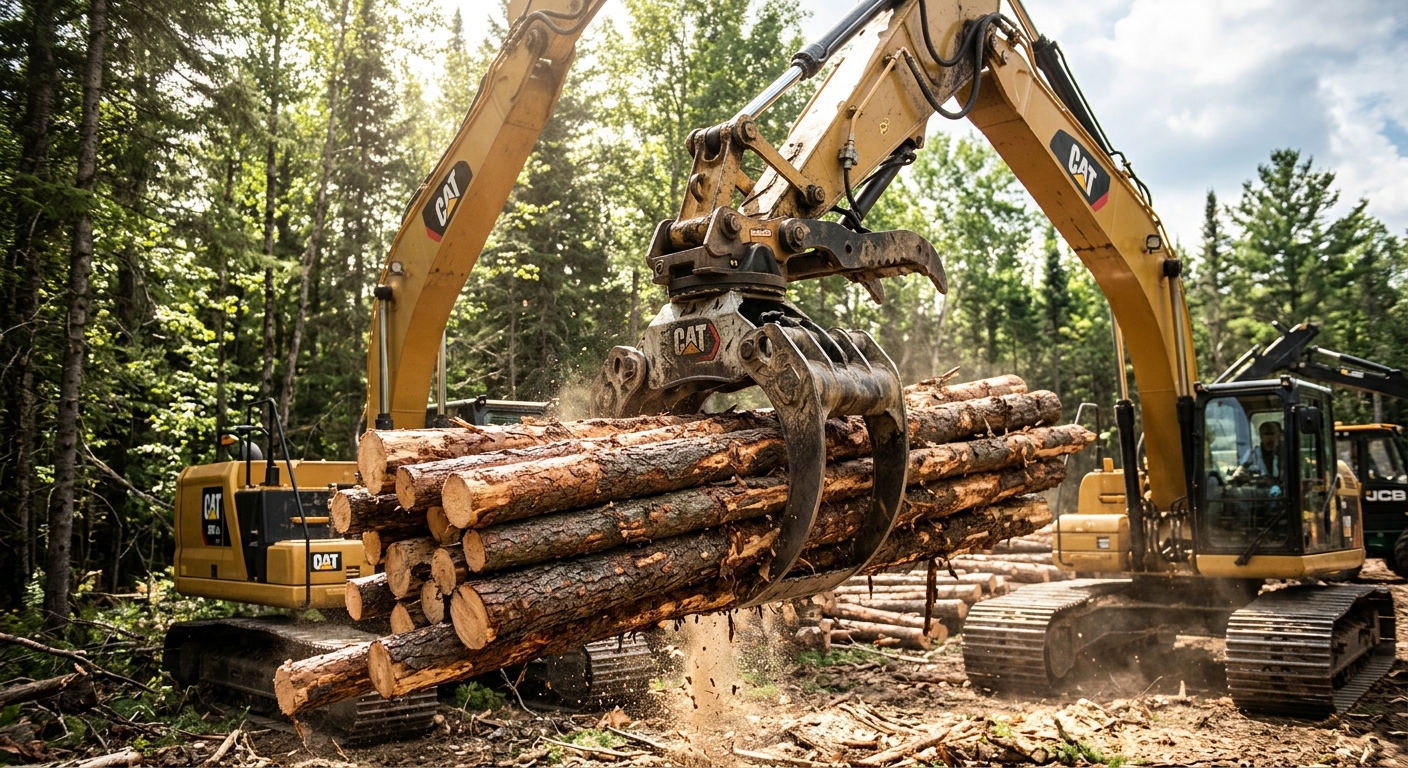
A grapple bucket is a standard bucket with a hydraulic top clamp. That single addition unlocks log handling, brush piling, rock placement, and demolition cleanup — tasks a plain bucket either can't do or does sloppily.
Root grapples (with tined bottoms instead of solid plates) let soil and small debris fall through while you carry logs and root balls. Solid-bottom grapples are better for loose material like construction debris, where you don't want anything dropping out.
A small forestry crew thinning a 5-acre woodlot can pile slash, load firewood logs onto a trailer, and handle bulky debris with the same attachment. That versatility makes a grapple especially useful for operators who regularly switch between landscaping, property cleanup, forestry, and light demolition work.
A rotary tiller attachment turns a mini skid steer into a small-acreage cultivator. For orchard owners, market gardeners, and landscape installers building new lawns, it can reduce the need for a separate tractor and 3-point tillage implement.
Tilling depth typically ranges 4–8 inches. Working width on mini skid steer tillers is usually 36–48 inches — narrower than a tractor PTO tiller, but more maneuverable in tight beds, orchards, and back yards where a tractor simply can't fit. A landscaper preparing a 5,000 sq ft new lawn can use the same compact machine for multiple stages of site preparation instead of bringing in separate equipment for each task.
Rotary tillers don't perform well in ground filled with large rocks or thick, undisturbed sod. For heavy vegetation, clear the surface first with a brush cutter or consider a soil conditioner when finer grading and seedbed preparation are the priority.
For property managers and landscapers in snowy climates, a snow blade keeps the machine billable through the off-season. A 60–72 inch angle blade clears residential driveways and commercial walkways without the storage hassle of a dedicated plow truck.
Two configurations to consider:
Mini skid steers are especially useful on sidewalks, condo complexes, narrow access routes, and tight urban lots where larger loaders or pickup-mounted plows may struggle to maneuver. For landscaping and property maintenance businesses, adding a snow attachment can also extend the working season and make better use of equipment that might otherwise sit idle during winter.
Don't buy nine attachments on day one. Start with the bucket and pallet forks — they cover the broadest range of paid work with zero hydraulic dependency. Then add attachments based on the jobs you're already losing, renting equipment for, or sub-contracting to other operators.
Also verify your machine's auxiliary hydraulic flow rating before buying anything hydraulic. An attachment that requires more flow than your loader can provide will deliver poor performance and may not operate as intended. If you're still selecting equipment, our guide on choosing the right mini skid steer loader walks through hydraulic specifications in more detail, and the most popular skid steer choices by use case page maps machine sizes to typical attachment loads. To compare compatible tools for digging, trenching, sweeping, mowing, material handling, and ground preparation, browse our mini skid steer attachments.
The right attachment lineup isn't about owning everything — it's about owning the four or five tools that match your most profitable jobs. For many landscaping and property maintenance businesses, that may be a bucket, pallet forks, auger, grapple, and brush cutter. Agriculture and orchard operators may benefit more from adding a rotary tiller, while construction and utility contractors often rely more heavily on buckets, forks, trenchers, and trench backfilling equipment.
At anqunmachinery, we manufacture mini skid steer loaders along with a range of compatible attachments for material handling, digging, trenching, land clearing, mowing, and site preparation. If you're spec'ing a machine and want help matching attachments to your specific jobsite requirements, get in touch with our team or browse our full product lineup to compare available configurations.
 Guides
 Guides
 Guides
 Guides
 Guides
 Guides