Track Mower & Skid Steer Loader Manufacturer

Contact Us
Track Mower & Skid Steer Loader Manufacturer
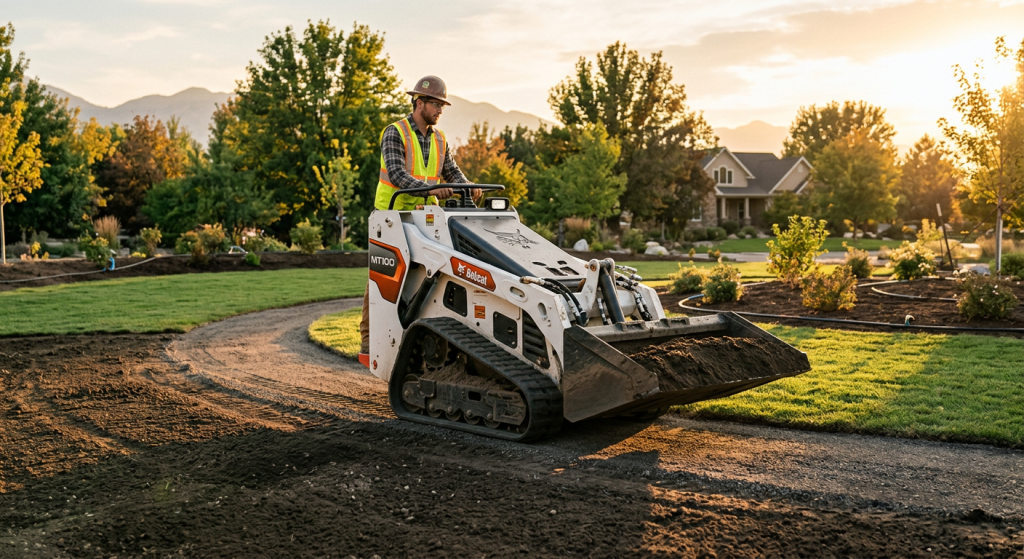
The right mini skid steer loader for your business is the one whose rated operating capacity, machine width, and compatible attachments — like the mini skid steer ripper for site prep — match your primary jobs. A landscaping crew maintaining suburban yards needs a fundamentally different machine from a construction contractor moving gravel on a commercial site. In this guide, we walk through every decision factor — from engine power and track type to hydraulic flow rates and OEM support — so you can invest confidently and avoid the costly mistake of buying a machine that's either too much or not enough. For hard, flat, or urban surfaces, our mini wheel skid steer loader is the purpose-built choice.
For buyers comparing available models, our stand-on mini skid steer loaders include tracked and wheeled options for landscaping, farming, construction, and property maintenance work.
Here’s a mistake we see constantly: buyers open a catalog, sort by horsepower, and select the most powerful unit within their budget. That’s backwards. The single most important question is: What will this machine be doing five days a week?
A property management company that mows, moves mulch, and clears debris across 30 residential accounts needs a nimble, narrow machine with a quick-attach bucket and a brush cutter option. A forestry operator clearing land needs raw pushing power, a reinforced undercarriage, and a grapple rated for logs. Same product category — completely different machines.
Write down every task the loader will handle, then rank them by frequency. Your top three tasks dictate the capacity class. Everything else is a bonus. If 70% of your work is moving soil and mulch in tight backyards, a 400 kg capacity unit around 90 cm wide is your sweet spot. If you’re regularly lifting pallets of pavers on a construction site, you need 600 kg+ capacity and a higher hydraulic flow for heavy attachments.
For a deeper look at how different industries match to specific skid steer configurations, check out the most popular skid steer choices based on how they’re used.
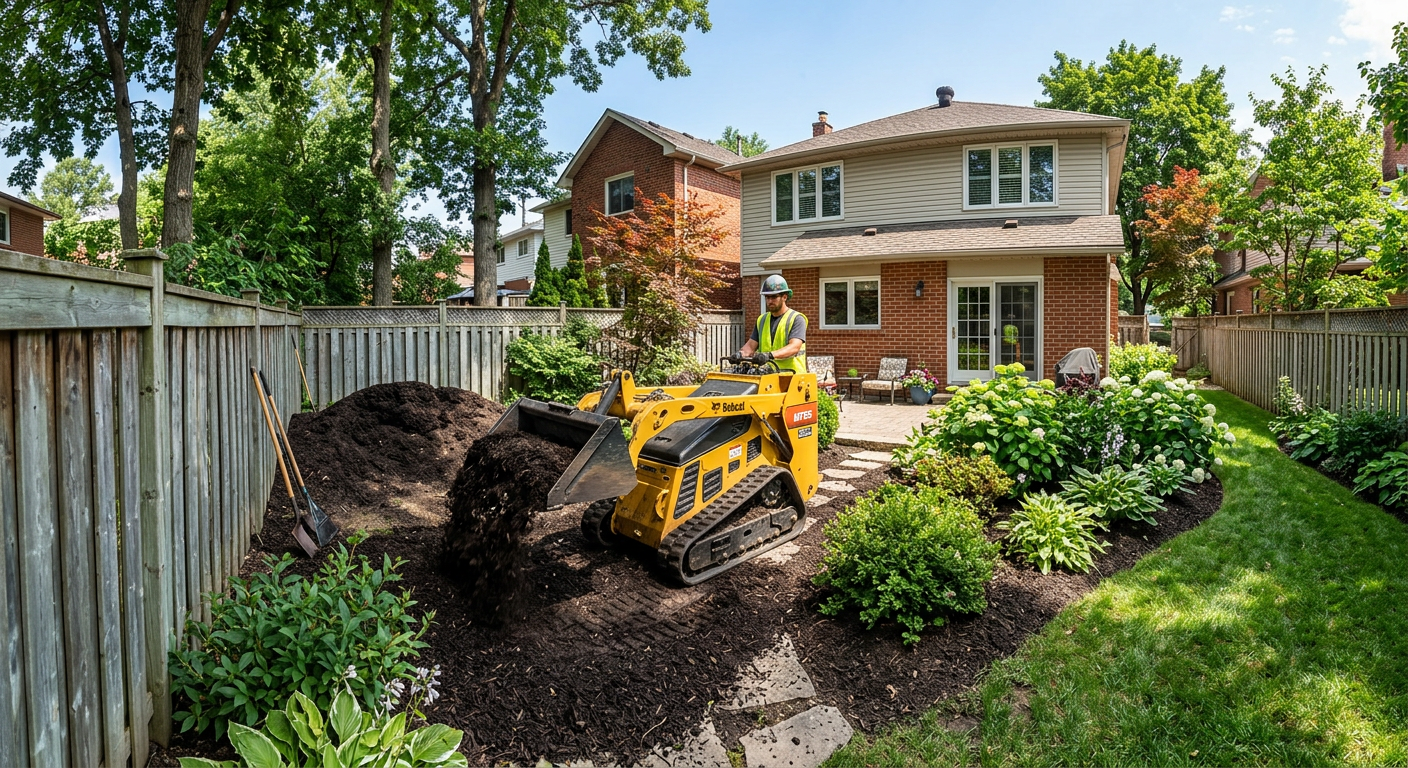
Operating capacity is the maximum load the machine can safely lift and carry at a specified tipping percentage — typically 35% of the tipping load for tracked units and 50% for wheeled units. It's the single number that determines what you can realistically do with the machine — for a concrete example, review the rated load and dimensions of the smallest tracked skid steer loader in our lineup.
Some manufacturers advertise the tipping load because it’s a bigger, more impressive number. A machine with a 1,200 kg tipping load only has a ~420 kg rated operating capacity on tracks. Always compare apples to apples by asking for the ISO-rated operating capacity.
If your heaviest regular load is a 350 kg pallet of sod, a 400 kg rated mini skid steer loader handles it with a small safety margin. But if you occasionally need to lift 500 kg concrete blocks, you either need a bigger machine or you need to accept that task requires a different piece of equipment. Oversizing by one class “just in case” adds cost, width, and fuel consumption — sometimes that trade-off is worth it, sometimes it isn’t.
This decision alone eliminates half the market for you, so make it early. Tracked mini skid steers offer lower ground pressure, better stability on slopes, and superior traction on soft or uneven terrain. Wheeled units are faster on hard surfaces, cheaper to maintain, and easier to transport.
We’ve written a detailed comparison if you want to go deeper: track vs. wheel skid steer — which one fits your jobsite best.
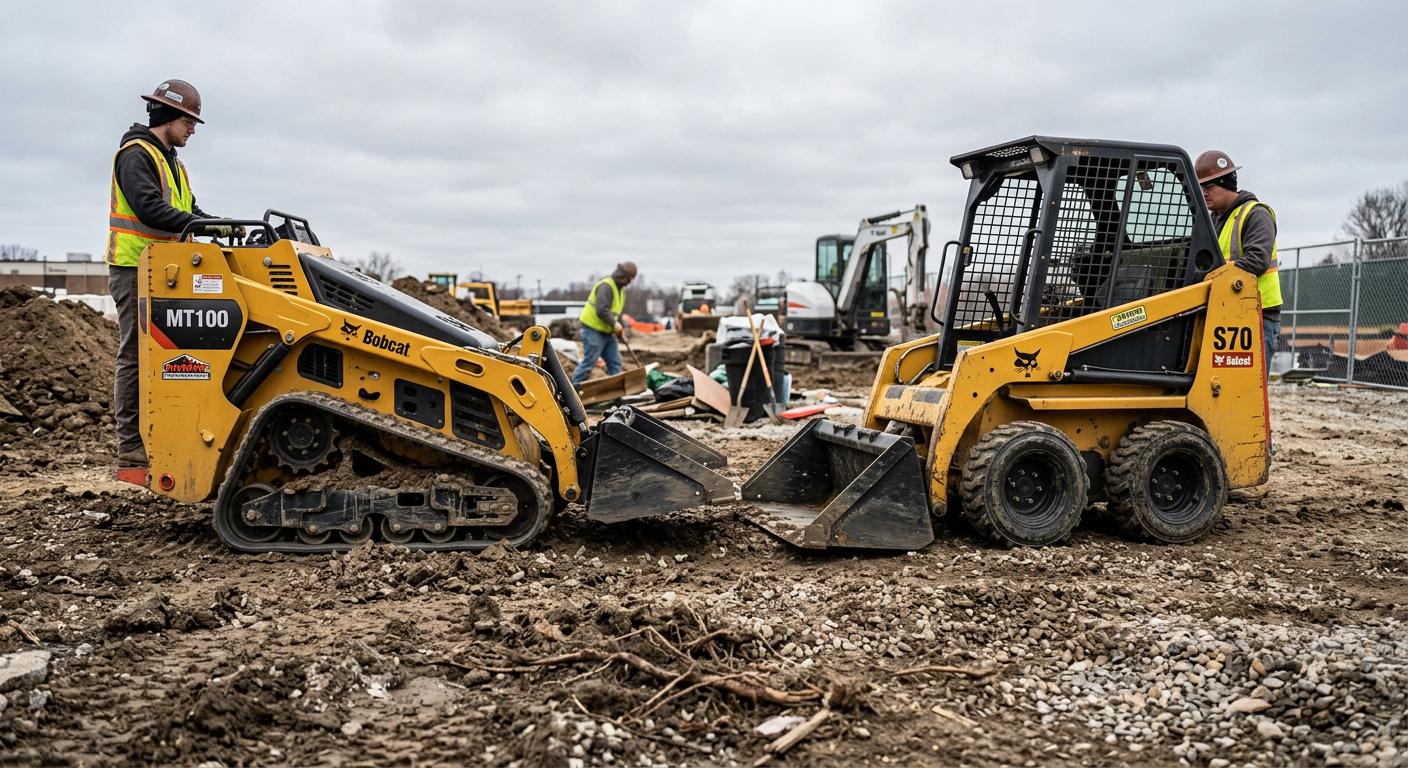
Everyone checks horsepower. Almost nobody checks whether the machine fits through a 90 cm garden gate — until it doesn’t.
Mini skid steers range from roughly 80 cm to 130 cm wide. If you serve residential customers, measure the narrowest gate, fence opening, or alley you regularly encounter. A machine that’s 5 cm too wide is useless for 40% of your jobs. For instance, a landscaping crew in suburban neighborhoods found that switching from a 110 cm unit to a 90 cm model let them access backyard projects without removing fence panels — saving an estimated 45 minutes per job site.
Overall height affects trailer loading (will it fit under highway overpasses on a standard trailer?), storage in standard garages, and working under low-hanging branches in orchard applications — compare specs across our full stand-behind mini skid steer lineup to confirm clearance before selecting. Machines with a radial lift path tend to be shorter at full raise than vertical lift path machines, which matters in orchards and covered structures.
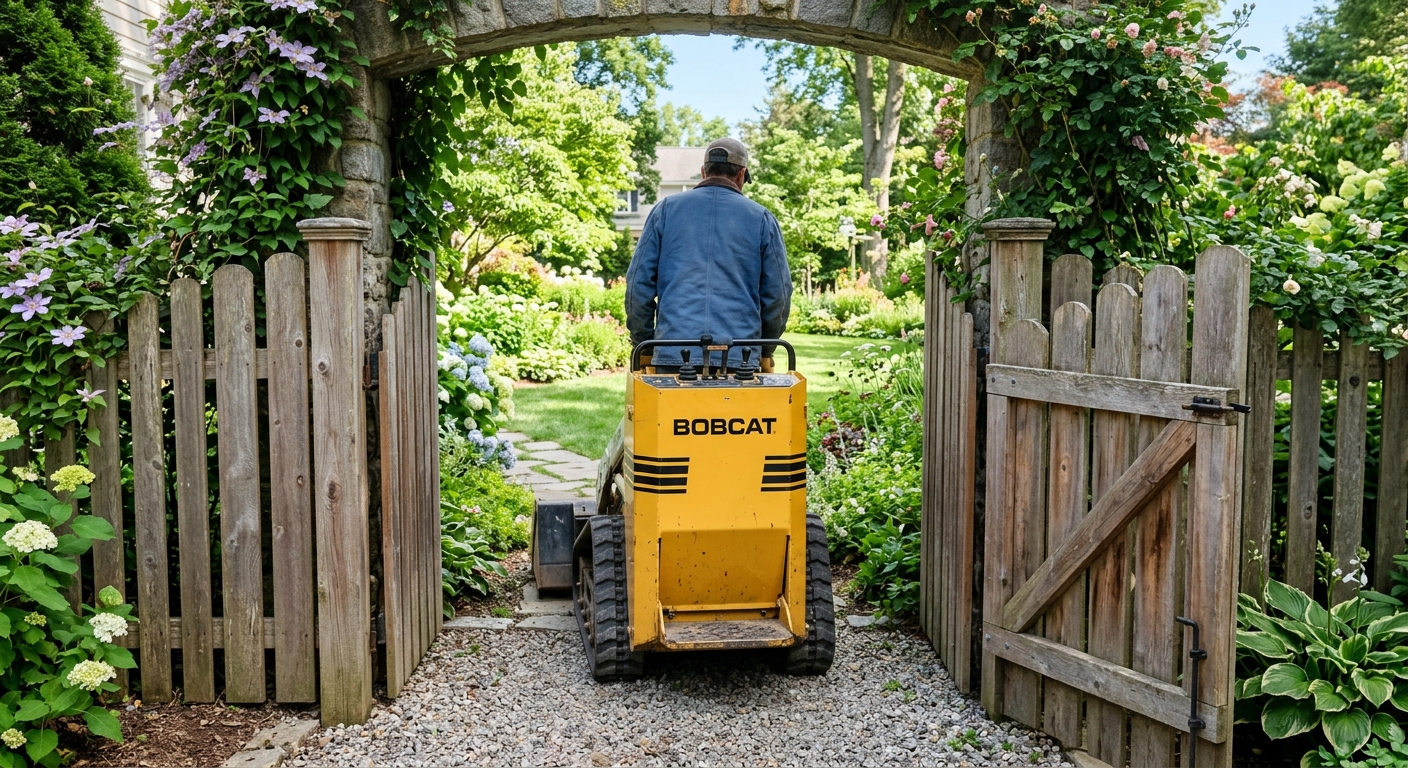
Your mini skid steer is only as versatile as its hydraulic system. Every powered attachment — augers, brush cutters, trenchers, stump grinders — runs on auxiliary hydraulic flow. If the flow rate is too low, the attachment bogs down or won’t operate at all.
A basic auger needs around 30–45 L/min of auxiliary flow. A forestry mulcher or stump grinder can demand 60–80 L/min. If you plan to run high-demand attachments, confirm the machine's auxiliary flow spec <em>before</em> purchase — upgrading a hydraulic pump after the fact is expensive and sometimes impossible on compact frames — confirm the hydraulic specs on your chosen mini skid steer loader before purchase.
Flow rate (L/min) moves the attachment. Pressure (bar or PSI) determines the force it can apply. A trencher cutting through clay soil needs both high flow and high pressure. Most quality mini skid steers operate between 170–210 bar. Below 170 bar, you’ll struggle with anything beyond basic bucket work.
Browse our full product lineup to compare hydraulic specs across different models.
A mini skid steer with no attachment options is an expensive wheelbarrow. The real ROI comes from the attachments you can swap in — turning one machine into a digger, a mower, a pallet handler, and a snow blower attachment depending on the season.
For trenching and utility installation work, a mini skid steer trench backfiller helps restore soil quickly and efficiently after trenching operations, improving site finishing speed and reducing manual labor.
The industry has largely standardized around the universal quick-attach plate for mini skid steers, but “largely” doesn’t mean “completely.” Some manufacturers use proprietary mounting systems that lock you into their attachment catalog. Before you commit, confirm the coupler type and check whether third-party attachments fit without adapters.
Think 18 months ahead. If you’re a landscaper today but plan to add hardscaping services next year, you’ll need a pallet fork and possibly a concrete mixer attachment. If you’re a farmer doing orchard maintenance now but expanding into land clearing, you’ll need a brush cutter and grapple. Buying a machine that supports those future attachments saves you from replacing the entire loader later.
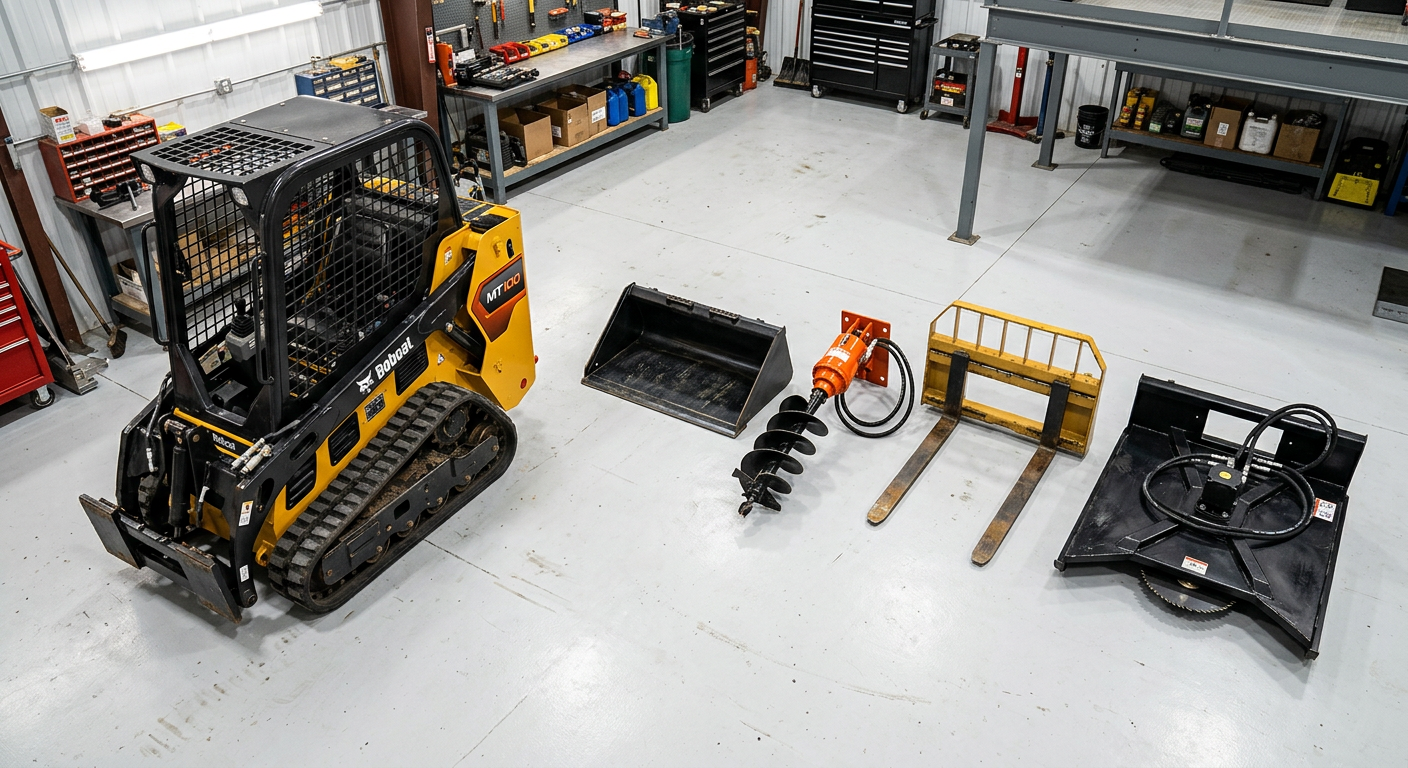
Most mini skid steers in the 2026 market run diesel engines between 15 and 50 HP. But gas and battery-electric options are gaining ground in specific niches.
Diesel engines deliver more torque at lower RPMs, burn fuel more efficiently under load, and last longer in commercial service. If your machine runs 6+ hours a day on a jobsite, diesel is still the clear winner. A 25 HP diesel typically consumes 4–6 liters per hour under moderate load — roughly 30–40% less fuel cost than an equivalent gas engine doing the same work.
Gasoline-powered mini skid steers cost less to manufacture and purchase. They’re fine for light-duty, intermittent use — a property manager running the machine 10 hours a week won’t notice the fuel penalty. But for full-time commercial use, the math favors diesel within the first year.
Battery-electric mini skid steers are emerging for indoor use, noise-sensitive urban environments, and emission-regulated zones. Current limitations: 2–4 hours of runtime per charge under load, and higher purchase prices. If you work indoors or in noise-restricted areas, electric is worth evaluating. Otherwise, it’s not quite there yet for all-day outdoor work.
The undercarriage is the most expensive wear component on a tracked mini skid steer. Rollers, idlers, sprockets, and the tracks themselves can account for 40–60% of total maintenance cost over the machine’s life. Ignoring this during the buying process is like buying a truck without asking about tire prices.
Most mini skid steers use rubber tracks. They’re lighter, quieter, and gentler on finished surfaces. Steel tracks (or steel-embedded rubber tracks) last longer in abrasive rocky conditions but cost more and damage paved surfaces. For landscaping and property management, rubber is the right call. For forestry and demolition, consider steel-embedded options.
Track longevity depends on terrain, operating habits, and maintenance. On clean turf and soil, expect 800–1,200 hours from a quality rubber track set. On gravel and rocky ground, that drops to 400–700 hours. Proper tensioning, avoiding sharp turns on hard surfaces, and keeping debris out of the undercarriage all extend life significantly. For a practical breakdown, read our guide on how long skid steer tracks last.
A machine is only as good as the support behind it. This is especially critical for international buyers importing from China, where the range of manufacturer quality is enormous.
A European rental company sourcing 20 units for their fleet worked with an OEM that provided full CE technical files, custom paint in their brand colors, and a 24-month parts guarantee with stock held in a European warehouse. That’s the standard you should expect — not hope for. If a supplier hesitates on any of these points, keep looking.
To learn more about our OEM capabilities and export documentation, visit our about us page or reach out directly.
You’ve absorbed a lot of information. Here’s how to distill it into an actual purchase decision.
Print this list. Take it to every supplier conversation. It will save you from emotional purchases and spec-sheet dazzle.
At Anqun, we manufacture mini skid steer loaders and attachments with full OEM/ODM support, CE documentation, and in-house quality control from welding to final testing. Whether you need a single unit or a fleet order customized to your brand, we’re built to support international buyers who take their equipment seriously. Explore our application-specific solutions or start a conversation — we’d rather help you find the right fit than push the most expensive option.
 Guides
 Guides
 Guides
 Guides
 Guides
 Guides