Track Mower & Skid Steer Loader Manufacturer

Contact Us
Track Mower & Skid Steer Loader Manufacturer
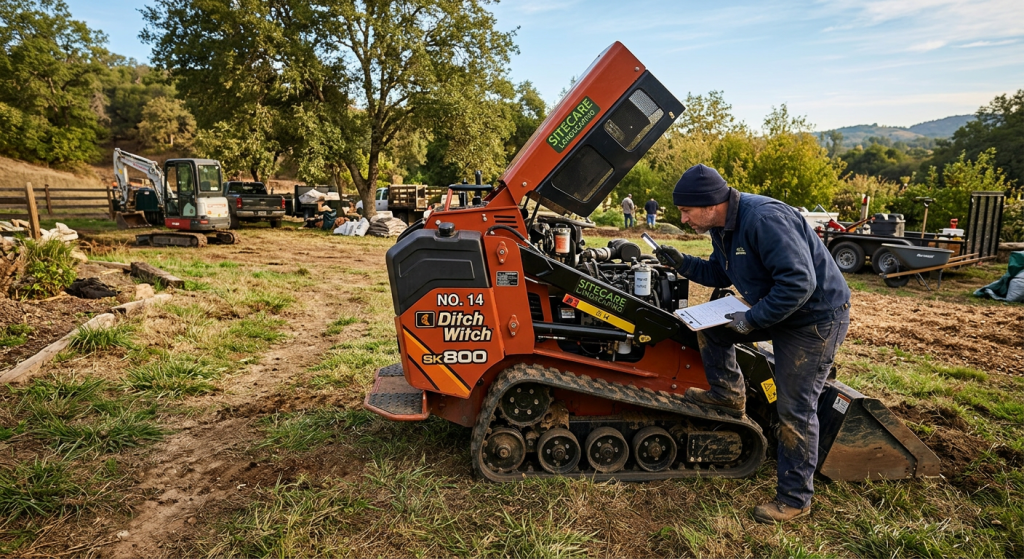
A structured mini skid steer maintenance schedule — covering the smallest tracked skid steer PSH100 and comparable compact machines — begins before purchase, and comparing the best mini skid steer models upfront ensures that maintenance demands match your team's actual service capacity. Machines that skip routine inspections typically face hydraulic failures, premature track wear, and engine damage that costs far more to repair than the maintenance avoided. Follow the intervals below and your machine will deliver consistent performance across landscaping, construction, and agricultural jobsites for years. This schedule covers your loader and every attachment you operate — including seasonal equipment such as the snow plow attachment that requires blade edge and hydraulic hose checks before winter operation. A structured mini skid steer maintenance schedule should cover the machine and all working attachments — including your mini skid steer broom, which requires regular brush inspection, debris clearing, and hydraulic line checks to maintain optimal sweeping performance.
| Component | Daily | Monthly | Annually |
|---|---|---|---|
| Engine Oil | Check level | Change if needed | Full oil & filter change |
| Hydraulic Fluid | Check level | Inspect for contamination | Full fluid & filter change |
| Track Tension | Visual check | Measure and adjust | Full track inspection |
| Air Filter | Visual check | Clean or replace | Replace regardless of condition |
| Grease Points | Grease all fittings | Check for wear | Inspect all pivot pins and bushings |
| Battery | Check terminals | Clean and test charge | Load test and replace if weak |
A compact skid steer operates in punishing conditions — tight construction sites, muddy orchards, rocky slopes — often operating 6 to 10 hours a day, which is why strict maintenance intervals matter more than on larger, less-stressed machines.
The good news: most catastrophic failures are preceded by warning signs that a disciplined inspection routine will catch early. Engine oil degradation, track tension drift, and hydraulic fluid contamination all develop gradually — making them entirely preventable with the right schedule.
For operators running multiple attachments such as a hydraulic breaker or snow blower, maintenance frequency should increase because high-cycle attachments place additional load on the hydraulic system and quick-coupler components.
This maintenance guide applies to compact equipment used in daily jobsite work, including our stand-on mini skid steer loaders.
Daily checks take 10–15 minutes and should happen before the engine starts. These are your first line of defense against in-field failures.
Monthly intervals — or every 50 to 100 operating hours, whichever comes first — are where you address items that degrade gradually and can't be caught by a visual daily check alone.
Inspect rubber track inner lugs for cracking or chunking, and check steel rollers for flat spots or seal leaks. Our detailed guide on how long skid steer tracks last covers what wear patterns to look for and when replacement becomes necessary.
Clean and inspect the quick-coupler plate, hydraulic couplers, and locking pins. Worn coupler pins allow attachment slop that accelerates boom wear. This is especially important if you're rotating between multiple mini skid steer attachments regularly.
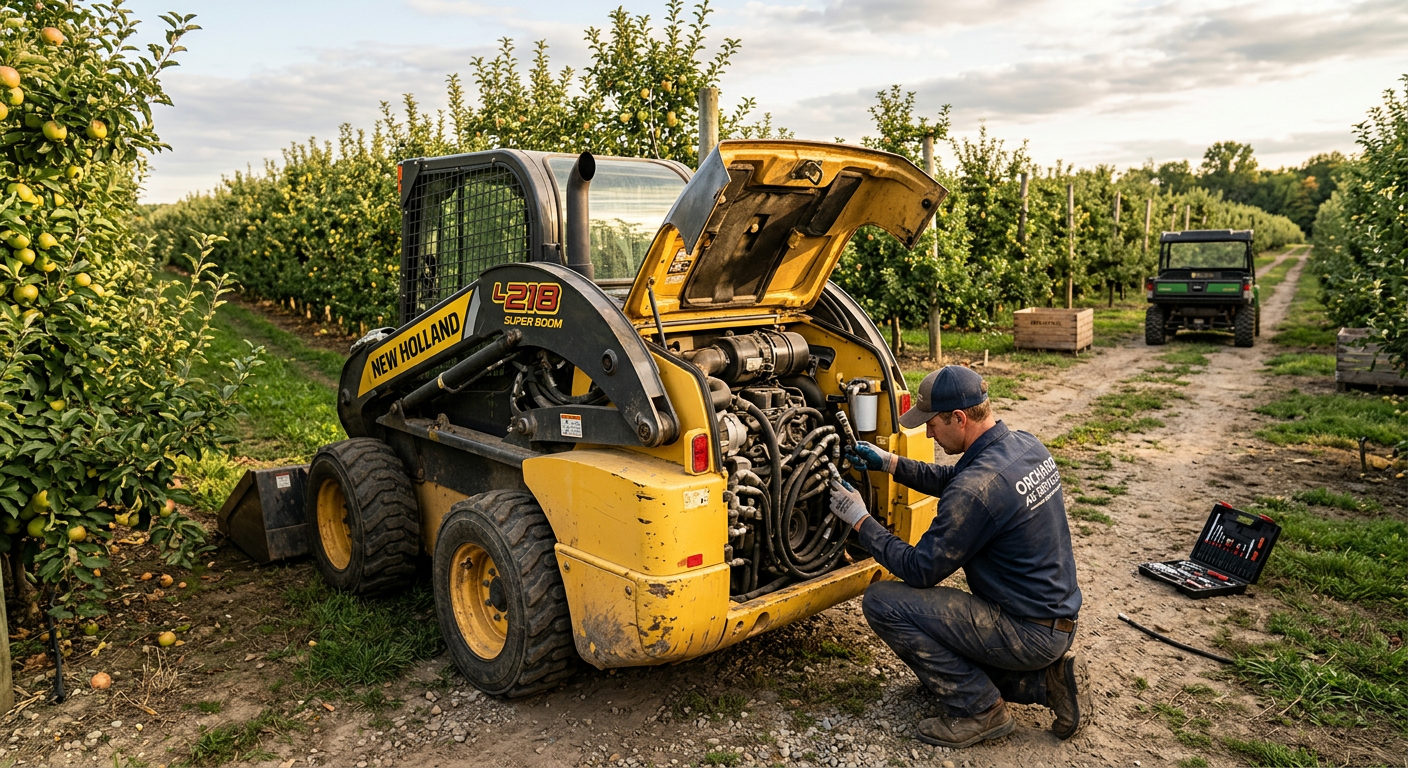
Annual service — typically at 500 to 1,000 hours depending on the manufacturer's specifications — is a comprehensive overhaul that resets wear items and identifies components approaching end of life before they fail in the field.
Real-world example: A landscaping contractor operating a mini skid steer across five residential sites per week — roughly 800 hours per year — implemented a formal annual overhaul at the 750-hour mark. By catching a weeping hydraulic cylinder seal and replacing it proactively, they avoided a mid-season hydraulic failure that would have cost three times more in emergency parts and lost billing days. Planned downtime during the off-season cost them one afternoon; unplanned failure would have cost a week.
The most common reason maintenance schedules fail is inconsistency — checks get skipped during busy seasons and are never caught up. A simple paper or digital log kept with the machine solves this. Record every service with the date, hour meter reading, and what was done. This log also has real resale value: a documented service history increases buyer confidence and supports a higher resale price when you're ready to upgrade.
For fleet managers overseeing multiple machines — for instance, a property management company operating two or three mini skid steers across different sites — assign a specific operator to each machine and make them accountable for the daily checklist. Centralized monthly and annual service can then be handled by a mechanic or returned to the dealer.
If you're evaluating which machine to build your maintenance program around, our comparison of track vs. wheel skid steers covers how machine type affects wear patterns and service needs. And if you're selecting attachments that will influence your hydraulic service intervals, the mini skid steer attachment buyer's guide is a practical starting point.
Anqun Machinery builds its mini skid steer loaders with accessible service points and standard Zerk fittings specifically to make field maintenance practical. If you'd like guidance on service intervals for a specific model or want to discuss OEM support options, get in touch with the Anqun team — we're here to help you keep your equipment running at full capacity.
 Guides
 Guides
 Guides
 Guides
 Guides
 Guides