Track Mower & Skid Steer Loader Manufacturer

Contact Us
Track Mower & Skid Steer Loader Manufacturer
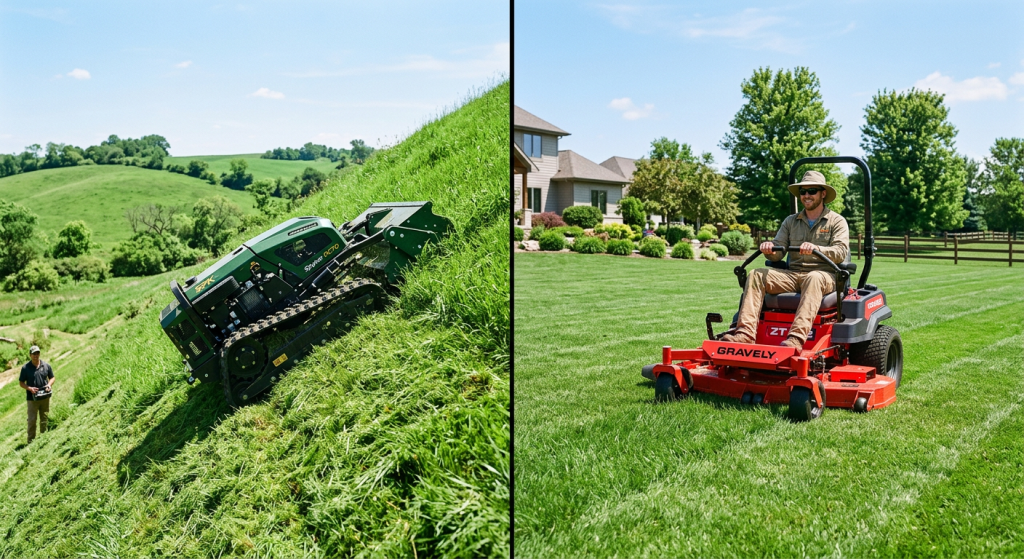
Remote control track mowers and ride-on mowers can both handle commercial vegetation maintenance, but they solve different operating problems. Ride-on mowers are generally most efficient on flat, open, and regularly maintained turf, while remote control track mowers become more relevant when slopes, uneven ground, difficult access, or operator exposure affect how the work can be completed.
The cost difference therefore goes beyond the purchase price. Labor requirements, terrain accessibility, downtime, maintenance, site conditions, and the amount of additional manual work required can all influence the real cost of operating either machine over time.
For buyers evaluating equipment specifically for slopes and difficult terrain, you can browse our remote control track mowers separately. This guide focuses on the cost and operational differences between tracked remote-control equipment and conventional ride-on mowers.
| Factor | Remote Control Track Mower | Ride-On Mower |
|---|---|---|
| Typical Operating Environment | Slopes, uneven terrain, difficult-access areas | Flat or gently sloped open ground |
| Operator Position | Operator controls the machine remotely | Operator rides directly on the machine |
| Traction | Tracked undercarriage | Typically wheeled |
| Initial Cost | May be higher depending on track and control systems | Often lower for comparable conventional mowing equipment |
| Labor Requirement | Can reduce direct operator exposure and some manual slope work | Requires an onboard operator during mowing |
| Flat Open-Area Productivity | Depends on machine size and configuration | Often more efficient on large, maintained turf |
| Difficult Terrain Access | Generally stronger | Can be limited by traction, slope, and operator conditions |
| Maintenance Focus | Engine, cutting system, tracks, and remote-control components | Engine, cutting system, tires, steering, and drivetrain |
Comparing only the initial equipment price can produce the wrong conclusion. The more useful approach is to evaluate total cost of ownership, or TCO, across the expected operating life of the machine.
A practical cost comparison should include at least five areas:
A ride-on mower may have the lower initial cost and still be the most economical choice on flat commercial turf. Conversely, a tracked remote-control mower may justify a higher purchase cost when it can complete terrain that would otherwise require additional labor, manual cutting, or separate specialized equipment.
Remote control track mowers can cost more upfront than conventional ride-on mowers with similar basic cutting capacity because the machine may include a tracked undercarriage, remote-control system, electronic controls, and components designed for more demanding terrain.
However, pricing varies considerably across both categories. Engine power, cutting system, machine size, control technology, build quality, brand, and configuration can all affect the final equipment cost.
For this reason, comparing the cheapest ride-on mower with a commercial tracked mower does not provide a useful cost comparison. Buyers should instead compare machines intended for a similar workload and then evaluate whether the additional terrain capability creates measurable operational value.
Labor is one of the most important variables in commercial mowing costs. With a ride-on mower, the operator remains on the machine throughout the mowing process. On flat and accessible terrain, this can be highly efficient because the operator has direct control and can cover large areas quickly.
The economics can change when the site includes slopes, embankments, drainage areas, rough ground, or locations that require additional manual cutting. In these situations, the cost is not simply the ride-on operator's time. The contractor may also need to account for slower operating speeds, additional workers, hand-held cutting equipment, or separate machines for areas that the ride-on cannot practically reach.
A remote control track mower can shift this calculation by allowing the operator to remain away from the machine while controlling it across terrain suited to tracked operation. Whether this produces a lower overall labor cost depends on the jobsite and should be calculated based on actual crew hours rather than assumed savings.
For a more realistic comparison, calculate the labor cost for one complete mowing cycle:
Multiply the difference by the number of mowing cycles completed each month or season. This provides a much more reliable estimate than assuming that one machine type automatically requires fewer workers in every application.
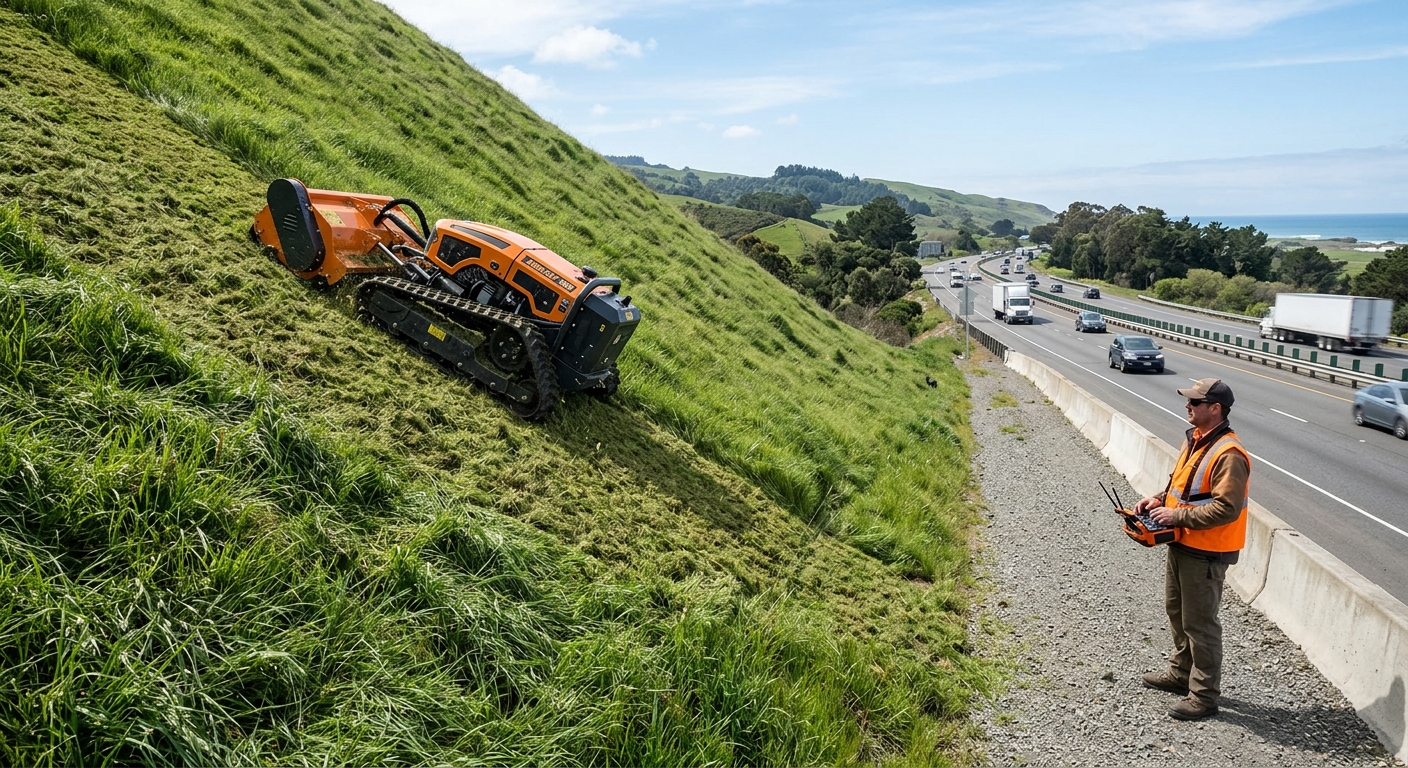
Terrain often has a greater impact on operating cost than the mower's purchase price. A lower-cost machine can become expensive to operate if it cannot efficiently complete significant portions of the site.
When comparing equipment, consider how much of the total work area includes:
If these conditions represent only a small portion of the work, a ride-on mower combined with occasional manual maintenance may remain the more economical option. If difficult terrain represents a large share of recurring work, the cost of labor and supplementary equipment becomes more significant.
On large, open, and regularly maintained turf, ride-on mowers are difficult to beat. Their design allows the operator to remain directly on the machine, respond quickly to obstacles, and maintain efficient mowing patterns across predictable terrain.
Typical applications where a ride-on mower may offer better economics include:
When the terrain is accessible and operator exposure is not a major concern, paying for a specialized tracked and remote-control platform may provide limited financial benefit.
The value proposition changes as terrain becomes more difficult. Rubber tracks provide a larger contact area than conventional wheels and can offer better traction and stability across certain soft, uneven, and sloped surfaces.
Soft ground can reduce the effectiveness of wheeled equipment and increase the risk of rutting or loss of traction. A tracked machine distributes its weight differently and may remain more practical in terrain where wheeled equipment struggles.
On slope-maintenance projects, the relevant question is not simply which mower is faster. Buyers need to consider whether the equipment is appropriate for the gradient, ground conditions, vegetation, and operating method required by the site.
Remote operation can provide an important practical advantage because the operator does not need to remain seated directly on the machine while it works. Actual operating limits still depend on the specific model and manufacturer instructions.
Construction perimeters, overgrown properties, roadside areas, agricultural land, and similar sites can include ruts, vegetation, uneven surfaces, and changing ground conditions. In these applications, traction and access may matter more than maximum mowing speed.
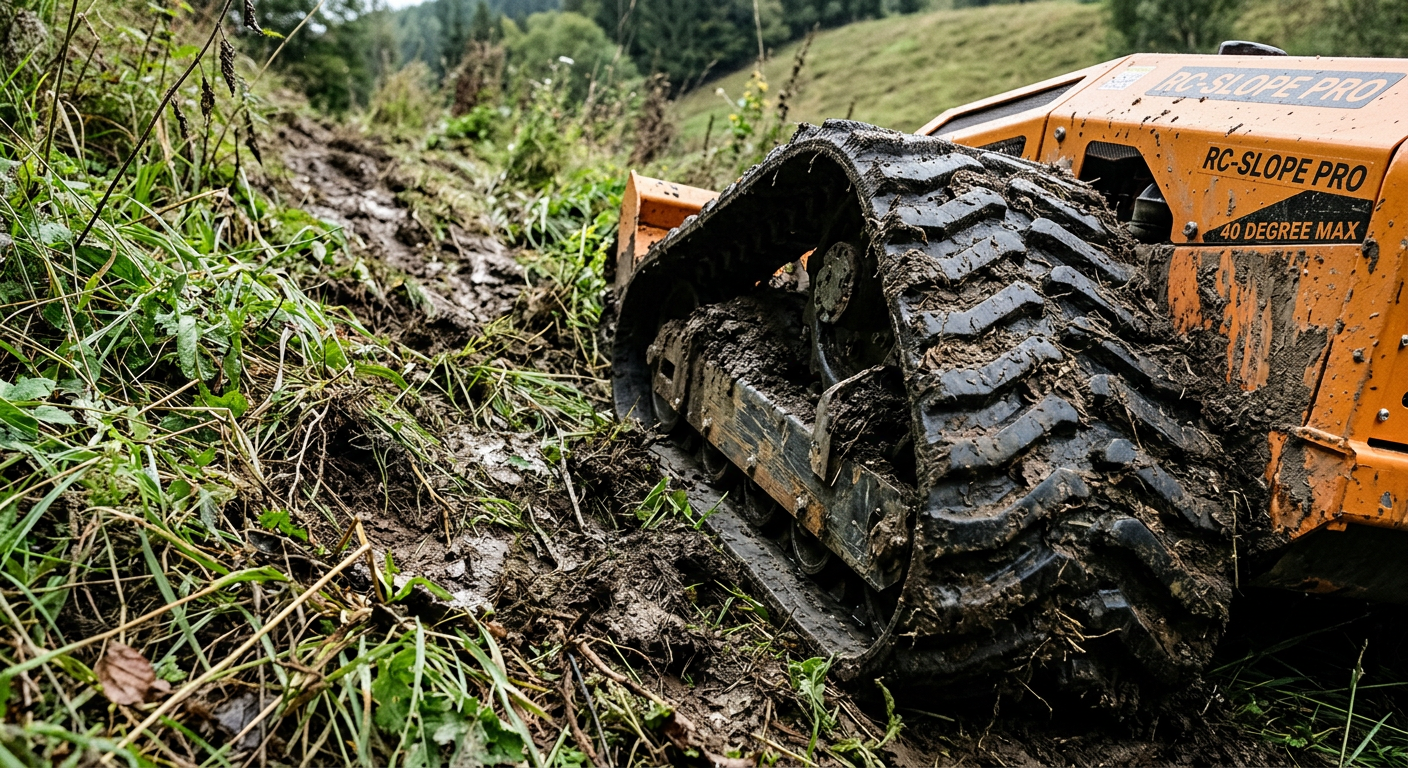
Equipment cost comparisons should also consider how the operator interacts with the machine. A ride-on mower places the operator directly on the equipment, while a remote control mower allows the operator to control the machine from a separate position.
For routine mowing on suitable flat terrain, direct onboard operation is normal and efficient. On more difficult slopes or inaccessible areas, however, keeping the operator away from the machine can change the operational risk profile of the job.
This does not mean that remote operation removes all hazards. Operators still need training, safe working procedures, appropriate positioning, and compliance with the manufacturer's operating instructions. But when evaluating difficult-terrain projects, businesses should consider whether equipment choice affects the amount of time workers spend directly exposed to challenging terrain.
Neither machine type is maintenance-free. The main difference is the type of components that require inspection and replacement.
Typical maintenance items include engine servicing, filters, blades, belts, tires, steering components, drivetrain parts, and other wear items. Maintenance frequency depends heavily on operating hours, machine quality, terrain, and service practices.
Tracked machines share many routine engine and cutting-system maintenance requirements but also introduce components such as tracks, rollers, tensioning systems, electronic controls, receivers, and wiring.
Track wear can become an important ownership cost when machines regularly operate on abrasive or demanding surfaces. Buyers should therefore ask about track availability, replacement procedures, wear parts, controller support, and spare-parts lead times before purchasing.
Rather than assuming one machine type is always cheaper to maintain, compare the expected annual service requirements for the specific models under consideration.
A mower that cannot operate because a replacement component is unavailable can cost more in lost working time than the price difference between two competing machines.
Commercial buyers should evaluate:
These factors become especially important for contractors, distributors, municipalities, and fleet operators whose equipment must remain productive during a limited mowing season.
Instead of relying on a generic claim that a remote control mower will pay for itself within a fixed number of months, calculate ROI using your own operation.
A simple comparison can use the following approach:
The simplified payback calculation is:
Additional Equipment Investment ÷ Annual Operating Cost Savings = Estimated Payback Period
This method allows buyers to make decisions based on their own labor rates, workload, terrain, and mowing frequency rather than relying on a universal ROI estimate that may not apply to their business.
Consider a commercial site that includes both open grass and several difficult slopes. A ride-on mower may complete the flat areas efficiently, but the slope sections may require slower work, additional manual trimming, or separate equipment.
In this situation, replacing every ride-on mower with a tracked remote-control machine may not be the most economical solution. A better fleet strategy could be to use ride-on equipment for high-speed mowing on flat ground and a remote control track mower specifically for slope and difficult-terrain sections.
This hybrid approach allows each machine to work where its operating characteristics provide the greatest value. For contractors managing multiple site types, equipment utilization may be more important to ROI than selecting a single mower type for every application.
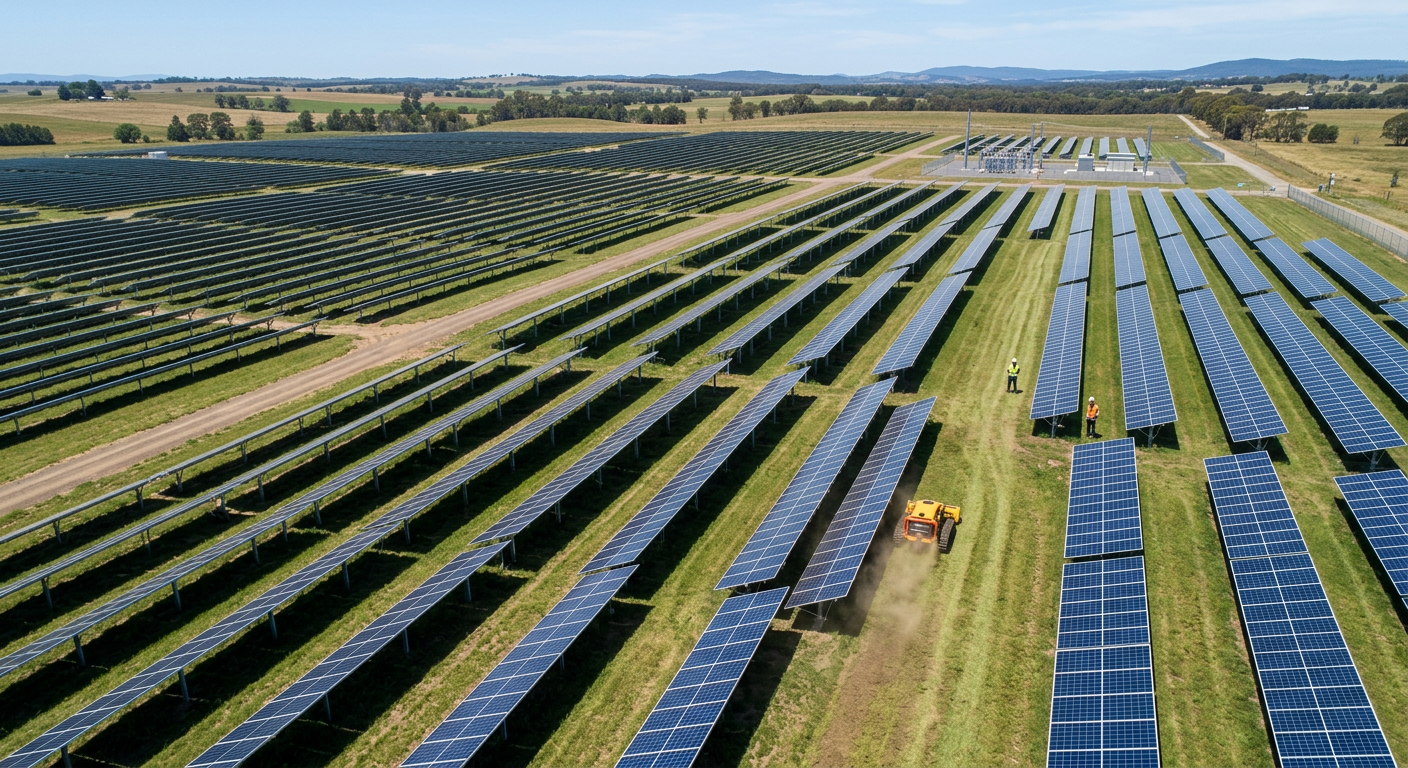
A ride-on mower is generally the stronger economic choice when most mowing work involves flat, open, accessible, and regularly maintained terrain.
It may make more sense when:
In these conditions, the lower complexity and strong flat-ground productivity of a ride-on mower can make it difficult for a specialized tracked mower to justify its additional cost.
A remote control track mower becomes more financially relevant when difficult terrain represents a recurring and meaningful part of the workload.
It may provide better overall value when:
The key is utilization. A specialized machine that is used frequently on the terrain it was designed to handle has a much stronger business case than one purchased for occasional slope work.
Choose a ride-on mower when the majority of your work involves large, open, relatively flat areas where mowing speed and straightforward operation are the main priorities.
Consider a remote control track mower when recurring work involves slopes, uneven terrain, soft ground, difficult access, or areas that would otherwise require additional manual vegetation management.
For operations covering both environments, the most cost-effective answer may be a mixed fleet rather than replacing one machine category with the other.
There is no universal winner in the cost comparison between remote control track mowers and ride-on mowers. Ride-on equipment usually has the advantage on flat, open turf where speed and simple operation matter most. Track mowers become more compelling when difficult terrain creates additional labor, access, or operational challenges.
The most reliable purchasing decision comes from calculating the cost of completing the entire job—not simply comparing equipment prices. Include operator hours, manual finishing work, maintenance, downtime, terrain accessibility, and equipment utilization in the calculation.
If your projects regularly involve slopes or difficult terrain, browse our track mower range to review available equipment options. For project-specific requirements, contact the Anqun team with information about your terrain, vegetation, operating conditions, and expected workload.
 Guides
 Guides
 Guides
 Guides
 Guides
 Guides