Track Mower & Skid Steer Loader Manufacturer

Contact Us
Track Mower & Skid Steer Loader Manufacturer
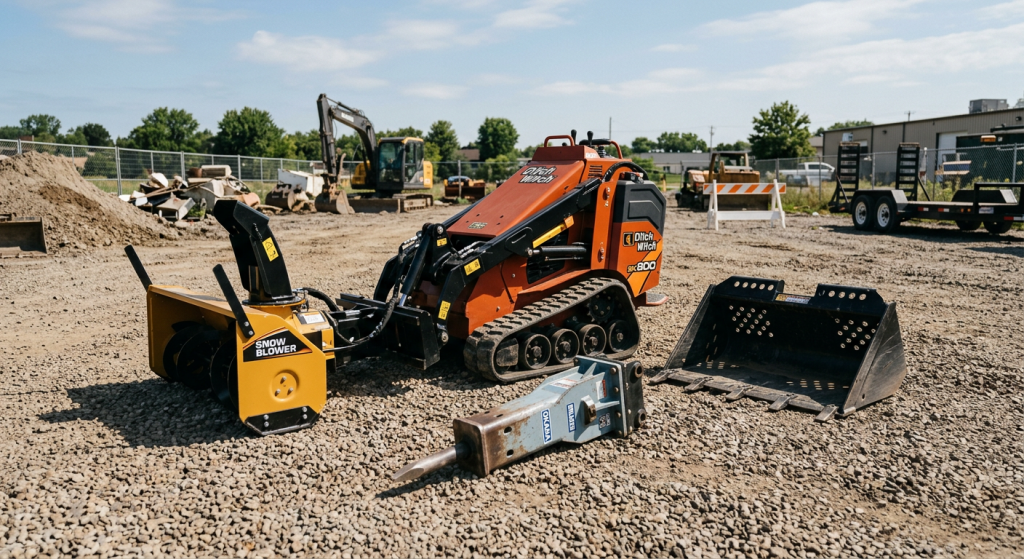
The right mini skid steer attachment comes down to three factors: your specific task, your machine's hydraulic output, and the terrain you're working on. Match those three variables correctly and a single compact loader can replace multiple pieces of specialized equipment. Get it wrong and you'll either underperform on the job or risk damaging your machine. For sweeper, bucket, or plow attachments on hard terrain, start with our mini wheel skid steer loader as your base machine.
Before choosing individual tools, review our mini skid steer attachment lineup to compare available options for digging, breaking, sweeping, mowing, and soil preparation.
| Attachment | Primary Use | Hydraulic Requirement | Best For |
|---|---|---|---|
| Snow Blower | Snow removal | High flow (15–25 GPM) | Municipalities, contractors, property managers |
| Hydraulic Breaker | Breaking concrete, rock | Medium flow (8–15 GPM) | Construction, demolition, trenching |
| Rock Bucket | Sifting soil, moving debris | Low (standard flow) | Landscaping, site cleanup, agriculture |
| Rotary Plow | Trenching, cable/pipe laying | Medium flow (10–18 GPM) | Utility installation, agriculture |
| Road Sweeper | Surface sweeping, debris collection | Medium flow (10–16 GPM) | Property management, municipalities |
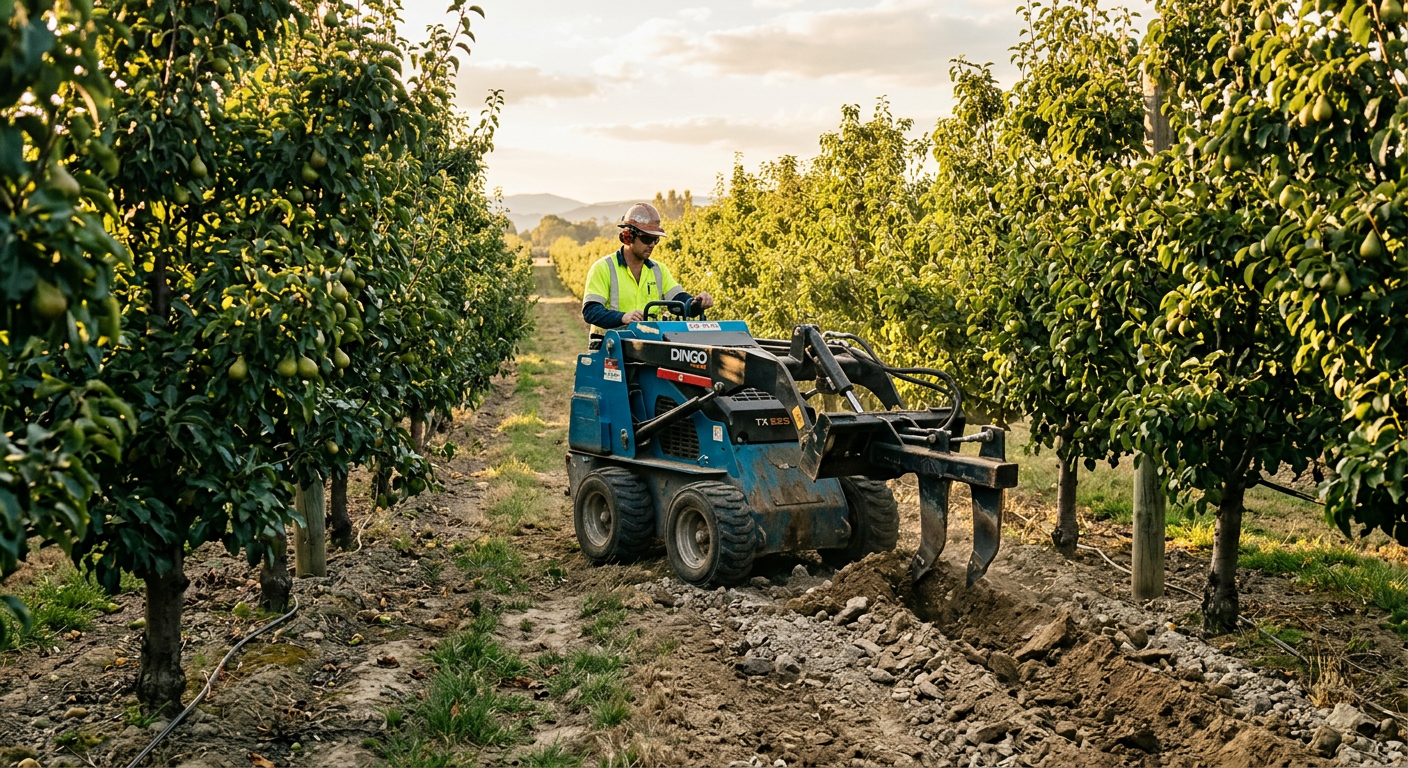
| Ripper | Breaking compacted soil, roots | Low (standard flow) | Land clearing, orchard prep, construction |
| Drum Spike Aerator | Lawn aeration | Low (standard flow) | Landscaping, turf management, sports fields |
Before browsing attachment options, define exactly what the machine needs to accomplish. Attachments fall into four broad task categories: earthmoving and material handling, surface preparation, snow and debris management, and breaking or demolition. Each category has different demands on your loader's hydraulic system, lift capacity, and operating weight.
For example, a landscaping contractor maintaining residential properties might need a drum spike aerator for turf work and a road sweeper for hardscape cleanup — two very different tools serving the same customer base. Identifying both needs upfront lets you plan attachment purchases around one compatible machine rather than two.
Browse the full range of mini skid steer attachments to see what's available before narrowing your shortlist.
Hydraulic compatibility is the most commonly overlooked factor in attachment selection — and the most expensive mistake to make. Every attachment has a required hydraulic flow rate (measured in GPM) and operating pressure (measured in PSI). If your loader's auxiliary hydraulics don't meet those specs, the attachment will either underperform or stall entirely.
A mini skid steer snow blower, for instance, typically requires 18–25 GPM to throw snow effectively at distance. Running it on a machine rated at 12 GPM will produce weak output and overheat the hydraulic system over time. Always confirm your loader's auxiliary flow rating before purchasing any powered attachment.
If you're still selecting your base machine, review the mini skid steer loader lineup to compare hydraulic specs across models.
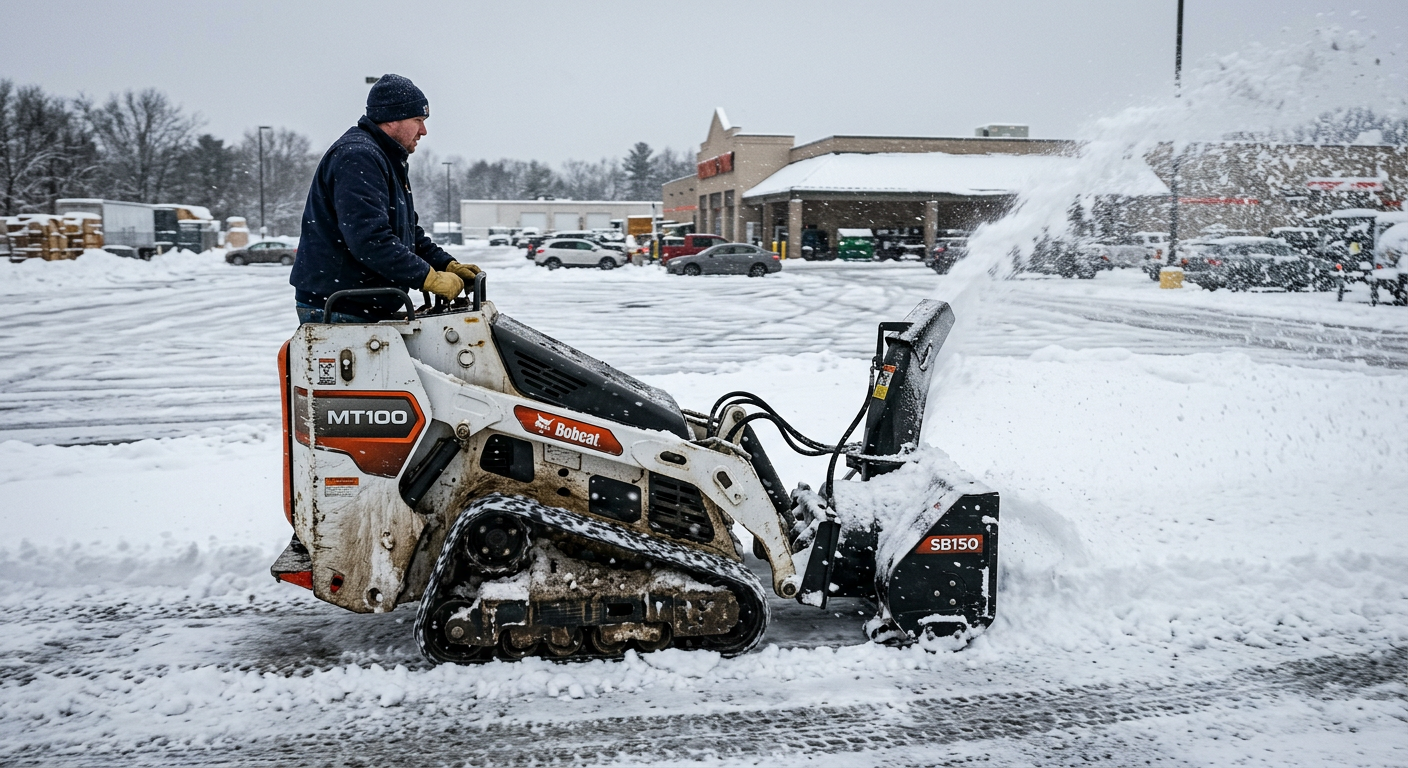
Different industries have distinct attachment priorities. Here's how common buyer types should approach their shortlist:
Site managers dealing with concrete slabs, rocky ground, or compacted fill need a mini skid steer hydraulic breaker for breaking, paired with a rock bucket for sifting and removing debris. These two attachments alone can handle the bulk of site prep work in tight spaces where full-size excavators can't operate.
Landscaping crews benefit most from a combination of a drum spike aerator for lawn health, a road sweeper for post-job cleanup, and a snow blower or snow plow for year-round revenue. This multi-attachment approach lets a single machine stay billable across seasons.
Orchard operators and farmers often need a rotary plow for trenching irrigation lines or a ripper to break compacted orchard soil between tree rows. For instance, a fruit orchard operator in a hilly region used a mini skid steer with a rotary plow attachment to install drip irrigation across 12 acres — a job that would have required a dedicated trencher on flat ground but was completed with one compact machine on uneven terrain.
See how compact equipment is applied across sectors on the applications overview page.
Not all attachments fit all machines. Most mini skid steers use a universal quick-attach coupler plate, but dimensions and pin spacing vary between manufacturers. Before ordering any attachment, confirm three things:
Anqun Machinery designs its attachments to be compatible with its own compact skid steer loaders and most standard universal coupler systems. If you're sourcing attachments for a third-party machine, share your coupler plate dimensions and hydraulic specs with the supplier before purchase to avoid costly returns or fabrication work.
If you're weighing tracked versus wheeled base machines for your attachment work, the post on track vs wheel skid steer performance by jobsite is worth reading before you commit.
The most cost-effective attachment strategy isn't buying one tool per job — it's identifying attachments that expand your machine's billable applications across seasons and client types. A single mini skid steer equipped with three to four compatible attachments can cover landscaping prep in spring, turf aeration in summer, site cleanup in autumn, and snow removal in winter.
When calculating ROI, factor in attachment cost, expected billable hours per season, and the cost of renting or subcontracting the same task. In most cases, a quality attachment pays for itself within one to two seasons of regular use.
To explore the full equipment range and find the right base machine to build your attachment system around, visit the Anqun Machinery products page or contact the team directly for OEM and compatibility guidance tailored to your operation.
 Guides
 Guides
 Guides
 Guides
 Guides
 Guides