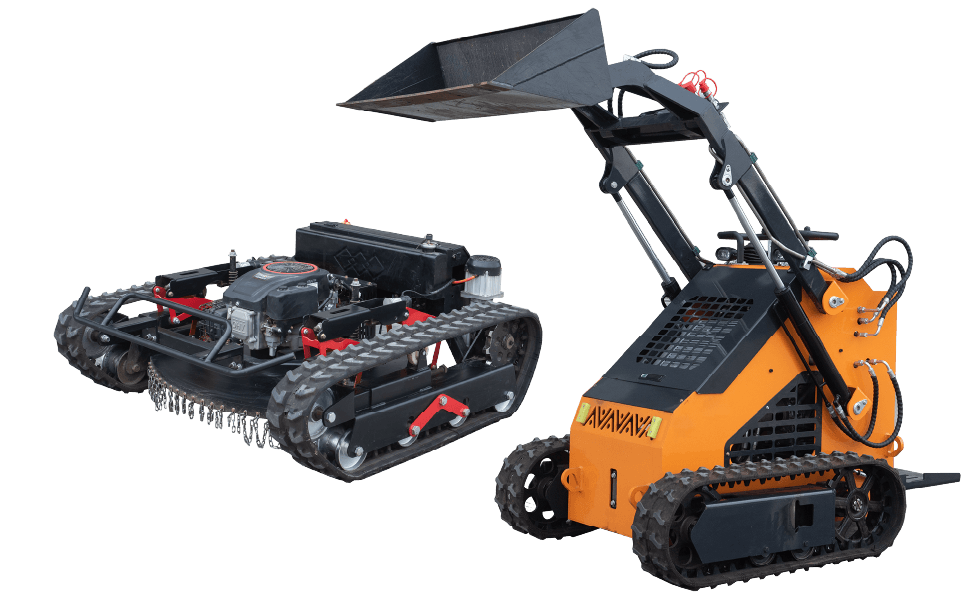
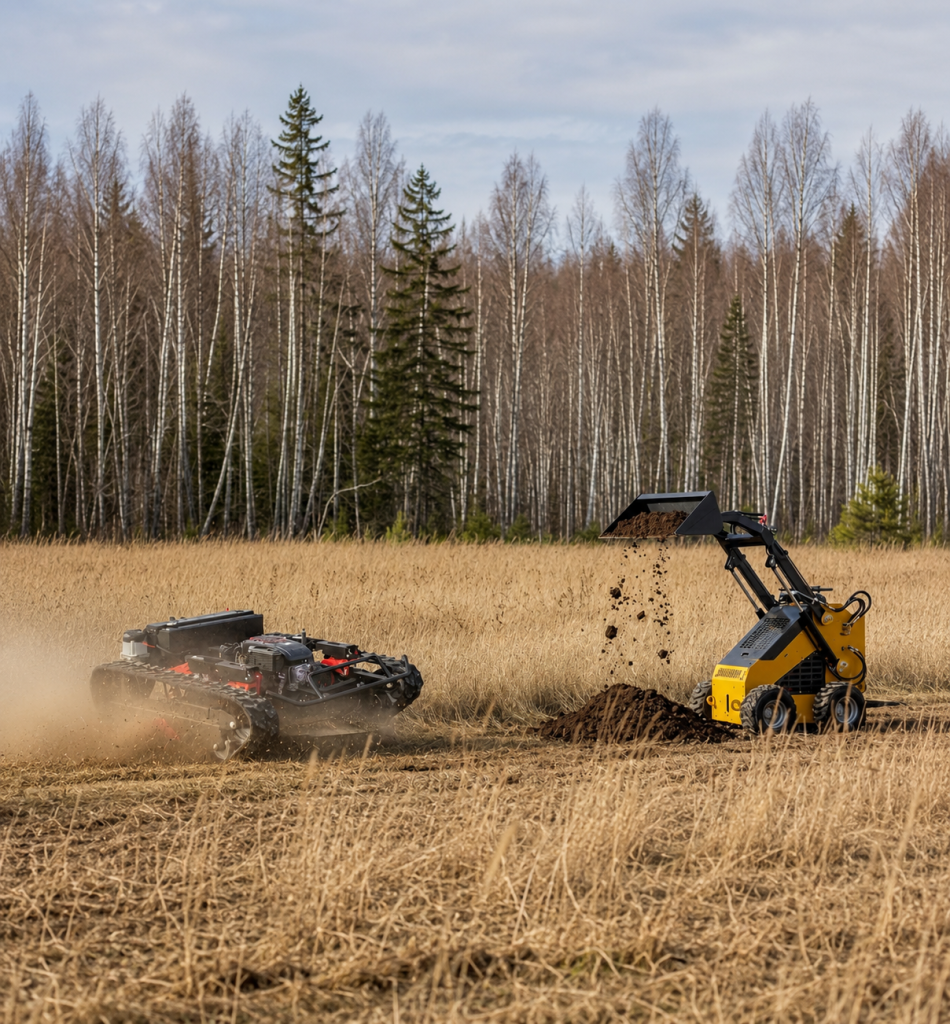
Track Mower & Skid Steer Loader Manufacturer

Contact Us
Track Mower & Skid Steer Loader Manufacturer
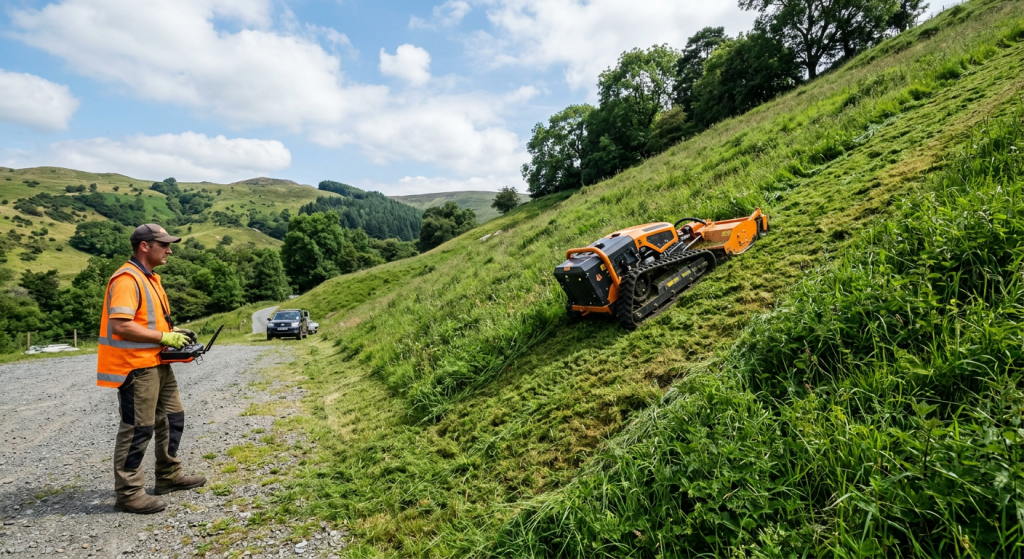
On slopes steeper than 30°, a remote control track mower is the safer and more productive choice — it removes the operator from the machine entirely, eliminating rollover risk while rubber tracks maintain traction where ride-on mowers lose grip. Ride-on slope mowers remain a cost-effective option for moderate inclines up to around 30°, but their operator-present design creates serious safety constraints on severe grades. Understanding where each machine excels helps you match the right equipment to your terrain and liability requirements.
| Feature | Remote Control Track Mower | Ride-On Slope Mower |
|---|---|---|
| Max Safe Slope Angle | Up to 55°–60° | Typically 25°–35° |
| Operator Rollover Risk | None — operator stays off the machine | Higher risk on steep slopes |
| Terrain Adaptability | Rubber tracks grip uneven ground well | Limited traction on loose or wet slopes |
| Ground Pressure | Low — minimal turf damage | Higher — tire compaction risk |
| Productivity on Slopes | High — can operate continuously on steep terrain | Reduced — speed limited for safety |
| Operator Fatigue | Low — controlled remotely | Higher — constant vibration and concentration |
| Initial Purchase Cost | Higher upfront investment | Lower entry cost |
| Best Use Case | Steep slopes, embankments, forestry | Gentle to moderate inclines |
The most critical distinction between these two machine types is where the operator stands during mowing. On a ride-on slope mower, the operator is seated on the machine — meaning any rollover, slide, or loss of traction directly endangers them. Most ride-on slope mowers are rated to operate safely up to 25°–35° depending on the model, tire type, and ground conditions. Wet grass, loose soil, or hidden obstacles can push a machine beyond its tipping threshold with little warning.
A remote control track mower eliminates this exposure entirely. The operator stands on stable ground — typically 10–50 meters away — and controls the machine via a handheld transmitter. If the mower slides, stalls, or tips, no one is injured. This design makes remote control mowers the preferred solution for highway embankments, dam faces, reservoir banks, and orchard slopes where grades routinely exceed 40°.
Rollover incidents account for a significant proportion of fatal machinery accidents in agriculture and landscaping. Removing the operator from the slope entirely is not just a convenience — it is a measurable risk reduction that many contractors now require for insurance and site compliance purposes.
To keep operators away from steep or unstable ground, explore our remote control track mowers for steep terrain.
Rubber tracks distribute machine weight across a much larger footprint than tires, which directly affects grip and turf preservation on slopes. A typical remote control track mower exerts ground pressure of 0.02–0.05 MPa, compared to 0.08–0.15 MPa for a ride-on mower on pneumatic tires. On wet or loose slopes, that difference determines whether the machine holds its line or begins to slide sideways.
Tracked mowers also handle irregular terrain — exposed roots, ruts, soft patches — without the bounce and instability that affects wheeled ride-on units. The low center of gravity combined with wide track contact allows track mowers to operate on gradients up to 55°–60° in favorable conditions, a range simply not achievable with a ride-on design.
For instance, a roadside vegetation management contractor maintaining steep motorway embankments — typically 40°–50° grades — would find a ride-on mower unusable and unsafe on those slopes. Switching to a remote control tracked mower allows the same crew to mow continuously without stopping to assess tipping risk, cutting a full embankment section in a single pass rather than working in cautious, time-consuming segments.
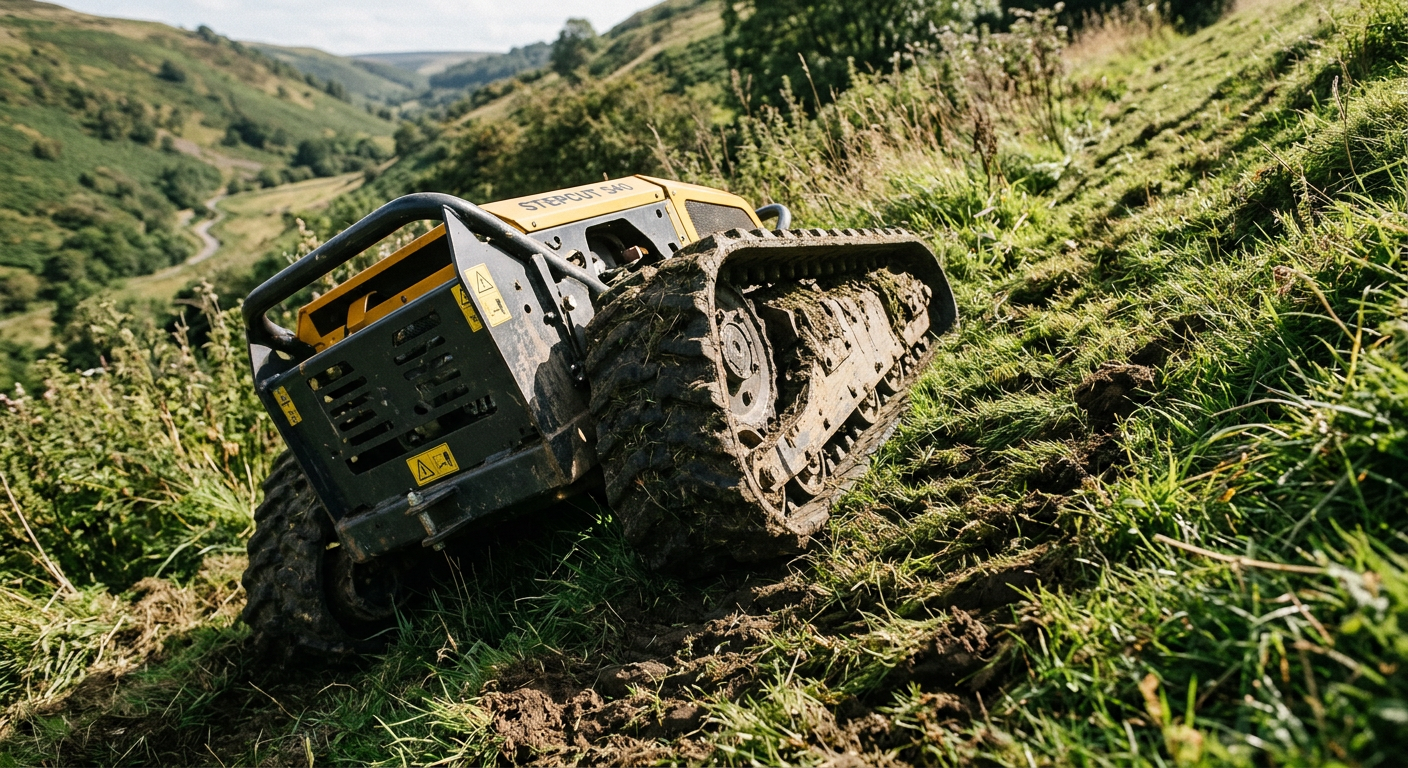
On flat or gently sloping ground, a ride-on slope mower can cover area quickly — wide cutting decks and higher travel speeds give them a productivity edge in easy terrain. But as gradient increases beyond 25°, ride-on operators must slow down significantly to maintain control, and some slopes require multiple passes at reduced angles, adding time and fuel.
Remote control track mowers maintain consistent working speed regardless of slope angle because the machine's stability is not tied to operator comfort or safety margins. Many models offer cutting widths of 800mm–1500mm and can mow 2,000–6,000 m² per hour depending on terrain and vegetation density.
| Criteria | Remote Control Track Mower | Ride-On Slope Mower |
|---|---|---|
| Max safe slope angle | Up to 55°–60° | Typically 25°–35° |
| Operator rollover risk | None — operator off-machine | High on steep grades |
| Terrain adaptability | Rubber tracks grip uneven ground | Limited on loose or wet slopes |
| Ground pressure | Low — minimal turf damage | Higher — tyre compaction risk |
| Productivity on slopes | High — continuous operation | Reduced — speed limits for safety |
| Operator fatigue | Low — remote operation | High — vibration and concentration |
| Initial purchase cost | Higher upfront investment | Lower entry price |
| Best use case | Steep slopes, embankments, forestry | Gentle to moderate inclines |
Operator fatigue is another hidden productivity factor. Remote operation requires concentration but eliminates the physical vibration, heat exposure, and postural stress of sitting on a machine for hours on rough terrain. Crews using remote control mowers typically report less end-of-day fatigue, which translates to more consistent output across a full working day. For more on steep-slope mowing capabilities, see our detailed guide on what angles remote control track mowers can actually handle.
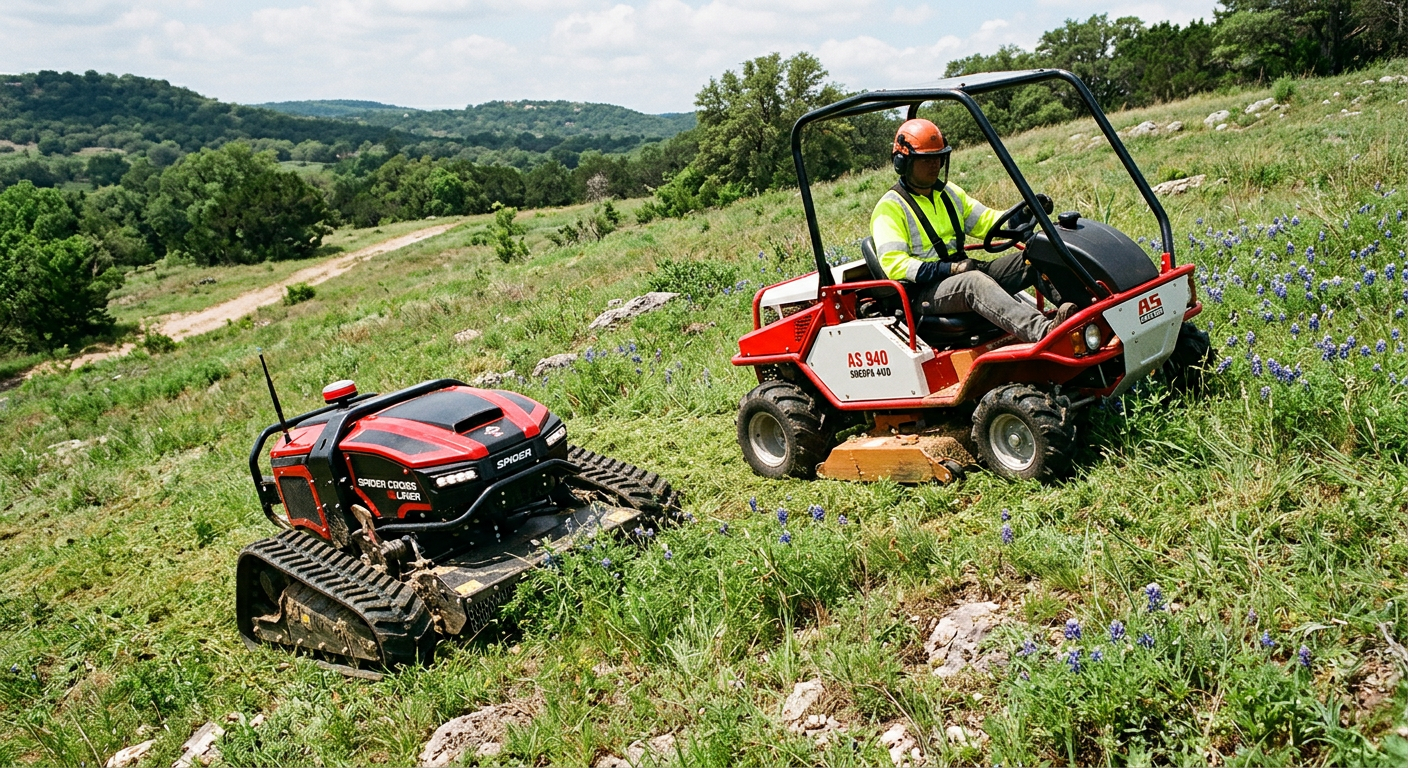
Ride-on slope mowers are not obsolete — they remain a practical, lower-cost solution for operations where slopes stay within safe operating limits. Golf courses, parks, and agricultural properties with rolling terrain in the 15°–30° range can be managed efficiently with a ride-on unit, particularly where wide cutting widths and fast travel speeds are priorities.
The lower purchase price of a ride-on mower also matters for smaller operations or those just entering slope mowing. If your terrain is consistently moderate and your crew is experienced with slope operation protocols, a ride-on mower may deliver acceptable productivity at a lower capital cost.
A fruit orchard operator managing inter-row vegetation on a hillside with consistent 20°–25° grades, for example, might find a ride-on slope mower perfectly adequate — the terrain is predictable, the rows provide natural guidance, and the operator can work at a safe, steady pace. The same operator expanding to steeper outer terraces above 35° would need to reassess and consider a tracked remote control solution for those sections. You can also explore how compact equipment fits into agriculture and farming applications more broadly.
The decision comes down to three factors: slope angle, operator safety requirements, and budget. If your terrain regularly exceeds 30°, or if site safety regulations prohibit operator-present machines on steep grades, a remote control track mower is the clear choice. If your slopes are moderate and predictable, a ride-on unit may serve you well at lower cost.
For contractors managing mixed terrain — some flat, some steep — a remote control track mower often delivers better overall value because it handles the full range without compromise. The higher upfront cost is offset by reduced liability exposure, lower operator fatigue, and the ability to take on steeper jobs that ride-on equipment simply cannot access.
Anqun Machinery manufactures a range of remote control track mowers built for demanding slope conditions, with models suited to landscaping, forestry, orchard management, and municipal vegetation control. If you are evaluating compact equipment options more broadly, our mini skid steer loaders and their compatible attachments offer additional versatility for ground preparation and site work alongside your mowing operation. Contact Anqun Machinery to discuss your terrain requirements and find the right machine configuration for your jobsite.
 Guides
 Guides
 Guides
 Guides
 Guides
 Guides